

Beekeeping is both rewarding and challenging, and one of the most important skills every beekeeper must develop is knowing the best time to inspect a beehive. Opening a hive at the wrong time can stress the colony, increase defensive behavior, and even put the queen at risk.
Knowing the best time to inspect a beehive helps reduce colony stress and improves overall hive health.
On the other hand, inspecting your hive under the right conditions allows you to monitor bee health, detect problems early, and keep the colony thriving. Whether you’re a beginner starting your first hive or an experienced beekeeper looking to improve your inspection routine, timing makes a significant difference.
Factors such as the time of day, weather conditions, season, and colony activity all play a role in determining when an inspection should take place.
In this complete guide, you’ll learn the best time to inspect a beehive, which weather conditions to avoid, how often inspections should be performed, common mistakes to prevent, and practical tips to keep both you and your bees safe. By the end of this article, you’ll know exactly when and how to inspect your hive with confidence.
Table of Contents
Why Timing Matters When Inspecting a Beehive
Inspecting a beehive is much more than simply opening the lid and checking the frames. The timing of each inspection plays a crucial role in maintaining a healthy, productive, and calm colony. Choosing the right moment reduces stress on the bees, makes it easier to observe important details, and allows you to identify potential problems before they become serious.
When bees are disturbed at the wrong time—such as during cold weather, heavy rain, or late in the evening—they become more defensive and may struggle to regulate the temperature inside the hive. Frequent or poorly timed inspections can also interrupt brood development and increase the risk of accidentally harming the queen.
By inspecting your hive under suitable conditions, you’ll be able to:
- Monitor the queen’s activity and egg-laying.
- Check brood development and colony strength.
- Identify pests or diseases at an early stage.
- Ensure the colony has enough food stores.
- Minimize stress and defensive behavior.
Remember that successful beekeeping is not about inspecting your hive as often as possible. Instead, it’s about inspecting it at the right time and for the right reasons.
If you’re new to beekeeping, don’t miss our comprehensive guide on How to Start Beekeeping: A Complete Beginner’s Guide to build a strong foundation before performing your first hive inspection.
Best Time of Day to Inspect a Beehive
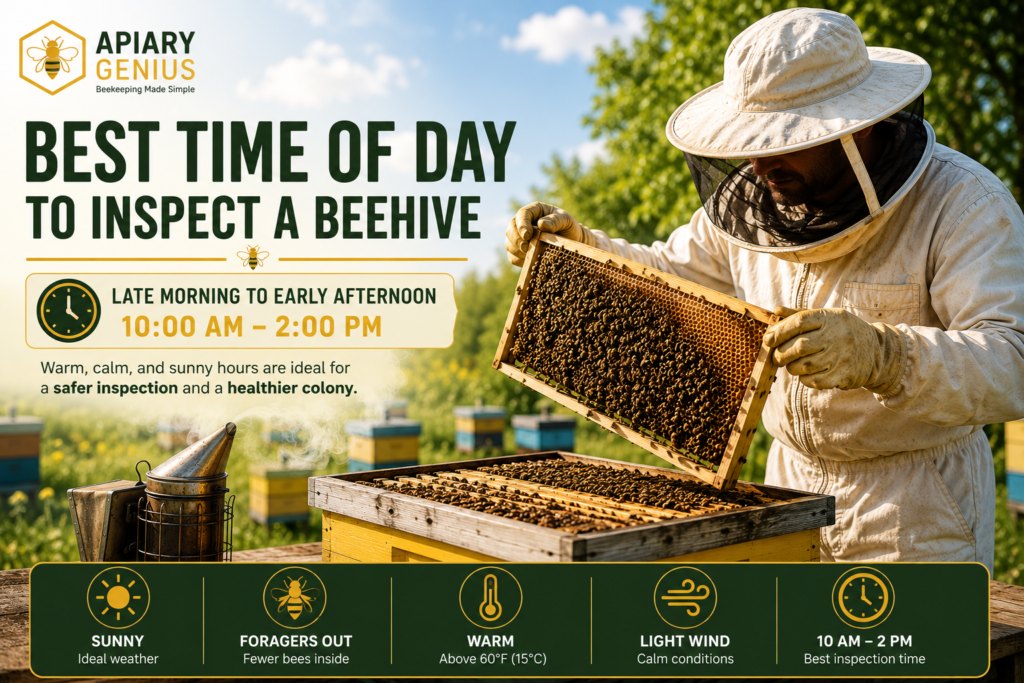
The best time to inspect a beehive is between late morning and early afternoon, typically from 10:00 AM to 2:00 PM. During these hours, the weather is usually warmer, and many forager bees are out collecting nectar and pollen. This means fewer bees remain inside the hive, making inspections easier and less stressful for both the beekeeper and the colony.
A warm, sunny day with little wind provides ideal conditions for opening the hive. Bees are generally calmer when temperatures are above 60°F (15°C), allowing you to examine frames more safely and accurately.
Avoid inspecting your hive early in the morning when temperatures are still cool and most bees are inside. Likewise, late evening inspections should be avoided because bees are returning to the hive, becoming more protective as they prepare for the night.
Ideal Conditions for a Hive Inspection
- Sunny or lightly cloudy weather
- Temperature above 60°F (15°C)
- Light or no wind
- Dry conditions with no rain
- Plenty of natural daylight
Choosing the right time of day helps reduce stress on the colony while giving you a clearer view of brood patterns, honey stores, and overall hive health.
Before your first inspection, make sure you have the right equipment. Read our guide: 5 Best Beekeeping Tools for Beginners in 2026.
Weather Conditions to Avoid
Even if you’re inspecting your hive at the right time of day, poor weather can quickly turn a routine inspection into a stressful experience for both you and your bees. Honey bees are highly sensitive to changes in temperature, wind, and moisture, so choosing favorable weather conditions is just as important as choosing the right hour.
The infographic below summarizes the weather conditions you should avoid before opening your hive.
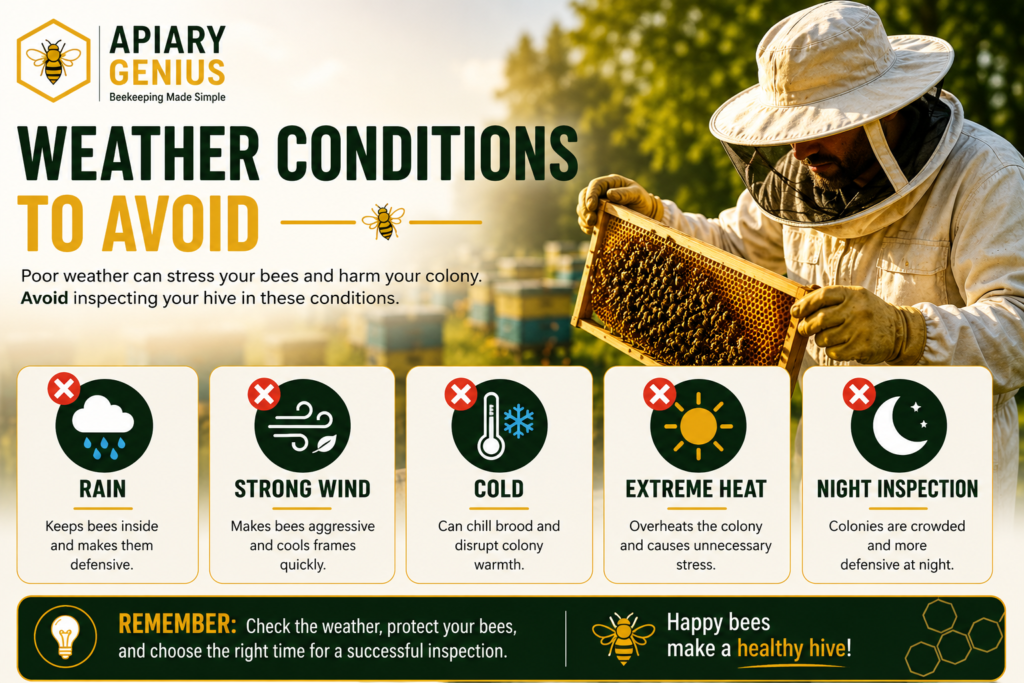
Avoid opening your hive during the following conditions:
Rainy Weather
Rain keeps forager bees inside the hive, making the colony more crowded and defensive. Opening the hive during rain also exposes brood and stored honey to excess moisture, which can negatively affect colony health.
Strong Winds
Windy conditions make bees more aggressive and can cause frames to cool quickly. Strong gusts also make it harder to handle equipment safely and increase the risk of dropping frames.
Cold Temperatures
When temperatures fall below 60°F (15°C), opening the hive may chill developing brood. Bees will cluster tightly to maintain warmth, making inspections more disruptive than helpful.
Extremely Hot Days
Very high temperatures can also create problems. Extended inspections during intense heat may overheat the colony and place unnecessary stress on both the bees and the beekeeper.
Late Evening or Night
Avoid inspecting a hive after sunset. Most forager bees have returned home, making the colony more crowded and defensive. Bees also rely on stable nighttime conditions to regulate the hive’s temperature.
Quick Checklist
Before opening your hive, ask yourself:
- Is it warm enough?
- Is it dry outside?
- Is the wind light?
- Is there enough daylight?
- Are bees actively flying?
If the answer is yes to all five questions, it’s usually a good time to perform a hive inspection.
Best Season for Hive Inspections
Although hive inspections can be performed throughout much of the year, spring is widely considered the best season for regular hive inspections. During this period, colonies become more active, brood production increases, and nectar and pollen are more readily available. These conditions make it easier to evaluate colony health and prepare the hive for a productive season.
Each season presents different inspection goals and challenges. Understanding what to look for throughout the year helps you avoid unnecessary stress on the colony while keeping your bees healthy and productive.
Want to know the ideal season to begin your beekeeping journey? Read our complete guide: Best Season to Start Beekeeping.
🌸 Spring – The Best Season
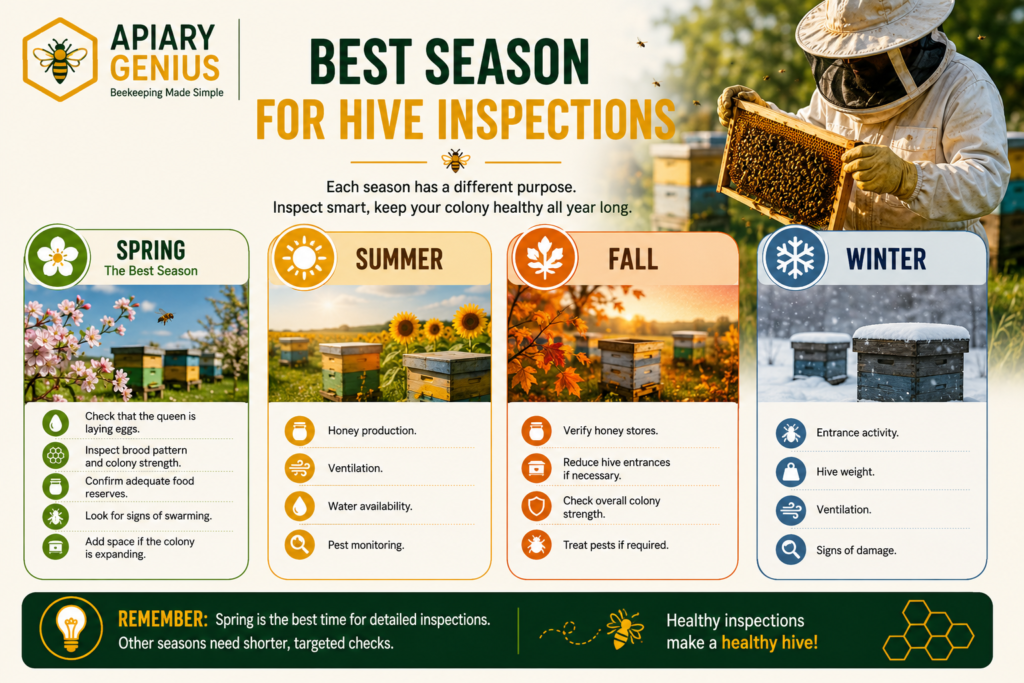
Spring is the ideal time for thorough hive inspections. As temperatures rise, bees become more active, and the queen increases egg-laying. During spring inspections, you should:
- Check that the queen is laying eggs.
- Inspect brood pattern and colony strength.
- Confirm adequate food reserves.
- Look for signs of swarming.
- Add space if the colony is expanding.
☀️ Summer
Summer inspections should be shorter and less frequent, especially during extremely hot weather. Focus on:
- Honey production.
- Ventilation.
- Water availability.
- Pest monitoring.
🍂 Fall
Autumn inspections prepare the colony for winter. Be sure to:
- Verify honey stores.
- Reduce hive entrances if necessary.
- Check overall colony strength.
- Treat pests if required.
❄️ Winter
Avoid opening the hive during winter unless absolutely necessary. Instead, inspect the hive from the outside by checking:
- Entrance activity.
- Hive weight.
- Ventilation.
- Signs of damage.
Seasonal Summary
Every season has a different purpose. Spring is the best time for detailed inspections, while summer, fall, and winter require more targeted and less disruptive checks.
How Often Should You Inspect a Beehive?
One of the most common questions new beekeepers ask is, “How often should I inspect my beehive?” The answer depends on the season, the colony’s strength, and your beekeeping goals. While regular inspections are essential, opening the hive too frequently can disturb the bees and interfere with their natural activities.
A healthy inspection routine helps you monitor brood development, queen performance, food stores, and early signs of disease without causing unnecessary stress.
Recommended Hive Inspection Schedule
🌸 Spring
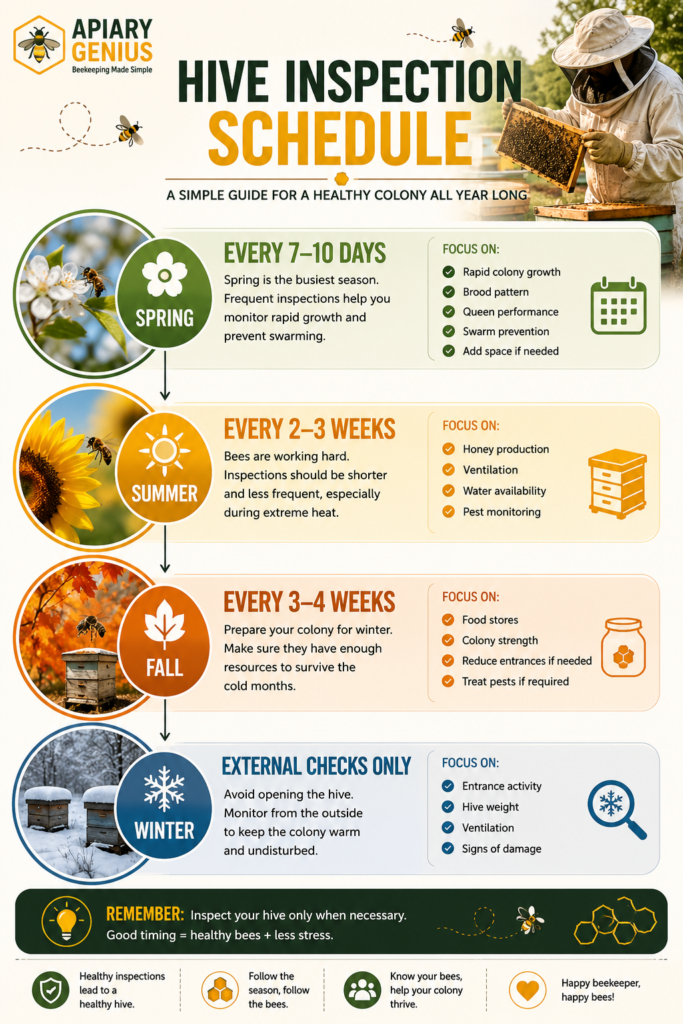
Inspect your hive every 7–10 days. This is the busiest period of the year, and frequent inspections help you monitor rapid colony growth and prevent swarming.
☀️ Summer
Inspect your hive every 2–3 weeks if the colony is healthy. Focus on honey production, ventilation, and signs of pests.
🍂 Fall
Inspect your hive every 3–4 weeks to prepare the colony for winter. Check food stores, colony strength, and whether any treatments are needed.
❄️ Winter
Avoid opening the hive unless absolutely necessary. Instead, monitor the colony from the outside by checking entrance activity, hive weight, and ventilation.
Signs That Your Hive Needs an Immediate Inspection
Inspect your hive sooner than planned if you notice:
- Unusual bee behavior.
- A sudden drop in bee activity.
- Signs of robbing.
- Evidence of pests or disease.
- Swarming activity.
- Damage to the hive.
Remember
The goal is not to inspect your hive as often as possible. The goal is to inspect it only when necessary, while keeping stress on the colony to a minimum.
Common Hive Inspection Mistakes to Avoid
Keeping a regular hive inspection schedule is important, but how you inspect your colony is just as important as when you inspect it. Even experienced beekeepers can make simple mistakes that stress the bees, damage brood, or cause them to miss early warning signs of problems. By avoiding the following common mistakes, you can make every inspection safer, quicker, and more effective.
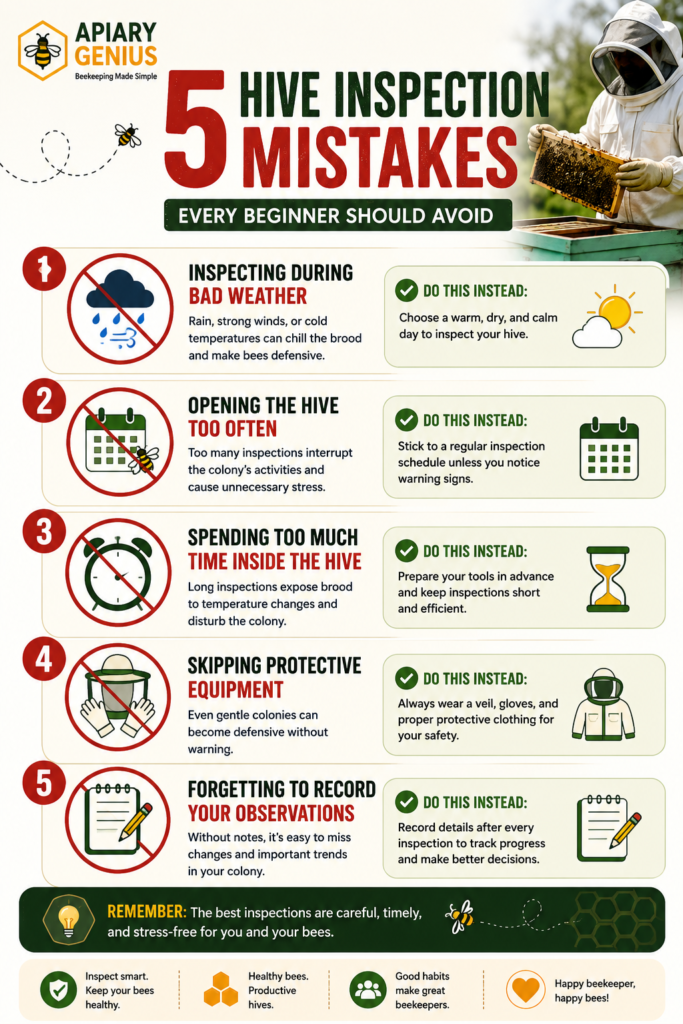
❌ Inspecting During Bad Weather
Opening a hive during rain, strong winds, or cold temperatures can chill the brood and make bees defensive. Always choose a warm, dry, and calm day whenever possible.
❌ Opening the Hive Too Often
Frequent inspections can interrupt the colony’s normal activities and create unnecessary stress. Stick to a regular inspection schedule unless you notice warning signs that require immediate attention.
❌ Spending Too Much Time Inside the Hive
Long inspections expose brood to changing temperatures and disturb the colony. Prepare your tools in advance and aim to complete each inspection efficiently.
❌ Skipping Protective Equipment
Even gentle colonies can become defensive without warning. Wearing a veil, gloves, and other protective clothing helps prevent stings and allows you to work with confidence.
❌ Forgetting to Record Your Observations
Each inspection provides valuable information about your colony. Recording details such as brood pattern, food stores, queen activity, and pest signs helps you identify changes over time and make better management decisions.
Quick Tips
Before every hive inspection, remember to:
- Choose suitable weather conditions.
- Prepare all your tools before opening the hive.
- Stay calm and move slowly.
- Keep inspections short and focused.
- Record your observations after closing the hive.
Key Takeaways
Successful hive inspections are not about opening the hive more often—they’re about inspecting it carefully, at the right time, and for the right reasons.
Frequently Asked Questions (FAQ)
How long should a hive inspection take?
A typical hive inspection should last 10 to 20 minutes, depending on the colony’s strength and your level of experience. Avoid keeping the hive open longer than necessary to minimize stress on the bees and protect the brood from temperature changes.
Can you inspect a beehive every day?
No. Daily inspections are unnecessary and can disturb the colony. During the active season, inspecting your hive every 7 to 10 days is usually enough unless you notice unusual bee behavior or signs of disease.
Is it safe to inspect a hive without protective clothing?
While some colonies are calm, wearing proper protective equipment is always recommended. A bee suit, veil, and gloves help prevent stings and allow you to inspect the hive more confidently and safely.
What should I look for during every hive inspection?
During each inspection, check for:
- A healthy brood pattern.
- Queen activity or fresh eggs.
- Adequate honey and pollen stores.
- Signs of pests or diseases.
- Overall colony strength and behavior.
What is the worst time to inspect a beehive?
Avoid inspecting a hive during rain, strong winds, very cold weather, or after sunset. These conditions make bees more defensive and can harm developing brood.
Choosing the best time to inspect a beehive is one of the simplest ways to keep your bees healthy and productive throughout the year.
The best time to inspect a beehive can change throughout the year, so always consider the weather, season, and your colony’s current condition before opening the hive.
Learn more about honey bee health from the Honey Bee Health Coalition.
Final Thoughts
Knowing the best time to inspect a beehive is one of the most valuable skills every beekeeper can learn. By choosing the right weather, season, and inspection schedule, you can reduce stress on your colony while identifying potential problems before they become serious.
The best time to inspect a beehive is not always the same. It changes depending on the season, weather conditions, and the strength of your colony. Learning to recognize these factors will help you perform safer and more effective hive inspections.
Remember that successful beekeeping is not about opening your hive as often as possible. Instead, it’s about making every inspection purposeful, efficient, and beneficial for both you and your bees.
If you’re just beginning your beekeeping journey, explore our other beginner-friendly guides to learn more about hive management, seasonal care, and essential beekeeping equipment. Happy beekeeping! 🐝