
Beekeeping is one of the most rewarding hobbies and agricultural activities you can start. Whether your goal is to produce fresh honey, support local pollinators, or simply enjoy observing one of nature’s most fascinating insects, success begins with having the right equipment.
Many beginners assume they need to purchase every tool available before setting up their first hive, but the truth is much simpler. A small collection of essential beekeeping tools is enough to help you inspect your colony safely, care for your bees with confidence, and build a strong foundation for long-term success.
Choosing the correct equipment from the beginning can save you money, prevent unnecessary frustration, and reduce the chances of making common beginner mistakes. Quality tools not only make hive management easier but also protect both you and your bees during routine inspections.
Understanding the purpose of each tool allows you to focus on learning beekeeping skills instead of struggling with inadequate or unnecessary equipment.
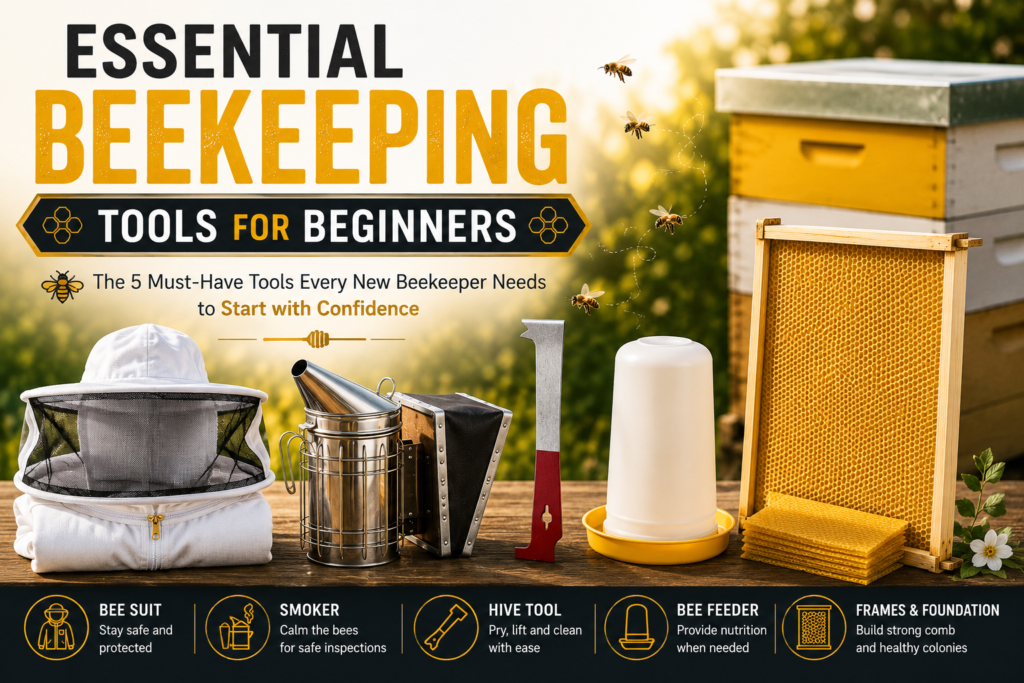
In this guide, you’ll discover the essential beekeeping tools for beginners, why each one is important, and how to choose the best options without overspending. From protective clothing that keeps you safe to the simple hive tool that every beekeeper carries, these are the items that experienced beekeepers consider indispensable.
By the end of this article, you’ll know exactly what you need to confidently begin your beekeeping journey and avoid wasting money on equipment you don’t need.
Whether you’re preparing for your very first hive or planning to expand your knowledge before purchasing bees, this guide will help you make informed decisions and start beekeeping the right way. Investing in the right tools today will make every hive inspection safer, easier, and far more enjoyable as your experience grows.
These essential beekeeping tools for beginners will help you build confidence, protect your bees, and make every hive inspection easier.
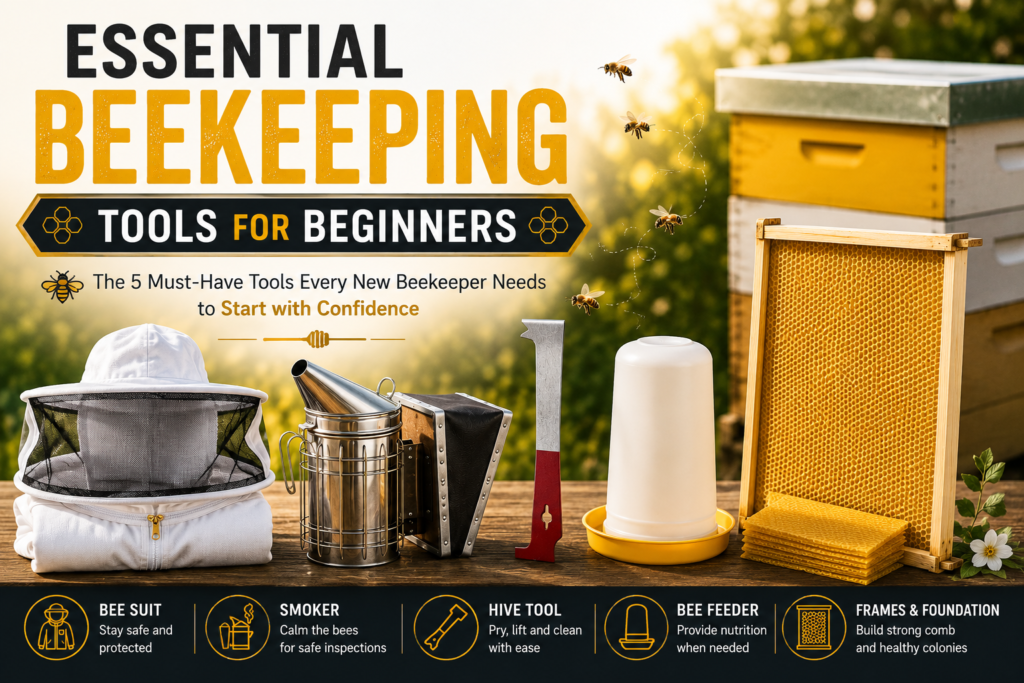
Choosing the right essential beekeeping tools for beginners is one of the best investments you can make before starting your first hive.
Table of Contents
1. Bee Suit and Protective Gear
A high-quality bee suit is one of the first and most important investments every beginner beekeeper should make. While experienced beekeepers may sometimes work with minimal protection, beginners should always prioritize safety.
Wearing proper protective clothing allows you to inspect your hive with confidence, reducing stress for both you and your bees. When you feel protected, you are more likely to move slowly and calmly, which helps prevent defensive behavior from the colony.
A complete bee suit should include a jacket or full-body suit, a protective veil, gloves, and sturdy footwear. The veil is especially important because it shields your face and neck, which are the areas bees are most likely to target if they become defensive.
Many beekeepers recommend suits made from breathable cotton or poly-cotton fabric, as they provide a good balance between comfort and protection, particularly during warm weather.
When choosing gloves, leather gloves offer excellent sting protection, while thinner gloves provide better finger control when handling frames. Beginners often prefer thicker gloves until they become more confident in their hive inspections. It is also a good idea to wear boots or closed shoes with your pant legs tucked inside to prevent bees from crawling underneath your clothing.
Although a quality bee suit may seem expensive at first, it is an investment that can last for many years with proper care. Buying reliable protective gear from the beginning will make every hive inspection safer, more comfortable, and much more enjoyable.
2. Smoker
The bee smoker is one of the most recognizable tools in beekeeping and remains an essential part of every beekeeper’s equipment. Its purpose is not to drive bees away but to calm the colony, making hive inspections safer and less stressful. A few gentle puffs of cool smoke encourage bees to focus on consuming honey instead of defending the hive, giving you enough time to inspect frames without causing unnecessary disturbance.
A good smoker should be made from durable stainless steel and include a protective heat shield to reduce the risk of burns. Models with a larger fire chamber are often easier to keep lit during longer inspections, saving time and frustration. Equally important is the choice of fuel. Natural materials such as untreated wood shavings, pine needles, burlap, or dried leaves produce cool, clean smoke that is safe for bees.
Avoid using treated wood, painted materials, cardboard with colored ink, or any fuel that may release harmful chemicals. These materials can produce toxic smoke that may harm the colony and contaminate hive products. The goal is always to produce cool, white smoke rather than thick, hot smoke.
One common mistake beginners make is using too much smoke. In most cases, only a few gentle puffs at the hive entrance and beneath the cover are enough to calm the bees. Excessive smoke can agitate the colony and make inspections less effective. With a little practice, learning to use a smoker correctly becomes one of the most valuable skills in successful beekeeping.
3. Hive Tool
The hive tool is often considered the most frequently used piece of equipment in a beekeeper’s toolbox. Although it is simple in design, it performs dozens of important tasks during every hive inspection. Bees naturally seal hive components together with propolis, a sticky resin they collect from trees. Without a hive tool, separating hive boxes or lifting frames can be difficult and may damage the equipment or disturb the colony unnecessarily.
A standard hive tool is made from durable stainless steel and features a flat pry end along with a hooked or curved end. The flat edge is perfect for loosening hive bodies, covers, and frames that have been glued together with propolis. The hooked end allows you to lift heavy frames safely while maintaining better control. Many beekeepers also use the tool to scrape away excess wax, clean propolis buildup, and remove burr comb during routine maintenance.
Because the hive tool is used so frequently, durability is more important than appearance. A strong stainless-steel model resists rust and can last for many years with minimal maintenance. It is also lightweight enough to carry comfortably during every inspection.
Although it is one of the least expensive beekeeping tools, the hive tool quickly becomes indispensable. Whether you are performing your first hive inspection or managing multiple colonies, this simple tool saves time, protects your equipment, and makes working with your bees significantly easier.
4. Bee Feeder
A bee feeder provides your colony with supplemental food when natural nectar is scarce. While healthy colonies prefer collecting nectar from flowers, there are times when additional feeding becomes necessary. New colonies, recently installed packages, nucleus colonies, or hives recovering from a difficult winter often benefit from sugar syrup until they become strong enough to gather sufficient food on their own.
Several types of feeders are available, including entrance feeders, frame feeders, top feeders, and bucket feeders. For beginners, frame feeders and top feeders are often recommended because they reduce the risk of robbing from neighboring colonies and make it easier to monitor food consumption. Choosing the right feeder depends on your hive type, local climate, and personal preference.
Proper feeding should always be done when necessary rather than as a permanent routine. Overfeeding can reduce the bees’ natural foraging behavior, while feeding at the wrong time may encourage robbing by nearby colonies. Fresh sugar syrup should be prepared carefully using clean water and white granulated sugar, and feeders should be cleaned regularly to prevent mold or fermentation.
A reliable bee feeder is a valuable tool for helping new colonies establish themselves and survive periods when natural food sources are limited. Used correctly, it supports healthy colony growth and gives beginner beekeepers greater confidence during their first season.
5. Frames and Foundation
Frames and foundation form the structural backbone of every beehive. The frames fit inside the hive boxes and provide support for the foundation, which serves as a guide for bees when building their honeycomb. Straight, well-built comb makes hive inspections much easier, allows bees to use space efficiently, and helps prevent problems caused by irregular or cross-comb construction.
Most beginner beekeepers choose wooden frames because they are affordable, durable, and easy to replace when necessary. The foundation itself is commonly made from either beeswax or food-grade plastic coated with a thin layer of beeswax. Wax foundation is often preferred by beekeepers who want a more natural option, while plastic foundation offers greater durability and requires less maintenance over time.
Properly assembled frames also make routine hive management much more efficient. They allow you to remove and inspect individual frames without damaging the comb, making it easier to check brood development, honey stores, and the overall health of the colony. Replacing old or damaged frames every few years also helps maintain a healthier hive and reduces the buildup of pests, diseases, and contaminants.
Although frames and foundation may seem like simple pieces of equipment, they play a vital role in the long-term success of every colony. Investing in quality materials from the beginning will provide a stable environment where your bees can build strong, organized comb and thrive throughout the season.
Essential Beekeeping Tools for Beginners: Final Thoughts
Starting your beekeeping journey doesn’t require purchasing every tool available on the market. Instead, focus on building a reliable collection of essential equipment that will help you work safely, confidently, and efficiently.
A quality bee suit, a dependable smoker, a sturdy hive tool, a practical feeder, and well-built frames with foundation are enough to support your first colony and develop the skills every successful beekeeper needs.
As you gain experience, you’ll naturally discover additional tools and accessories that suit your beekeeping style. However, mastering the basics is far more valuable than owning expensive equipment you rarely use. Regular hive inspections, careful observation, and continuous learning will always have a greater impact on your success than buying every new product that becomes available.
Remember that beekeeping is a journey of patience and constant improvement. Every inspection teaches you something new about your colony’s behavior, seasonal changes, and hive management. By starting with the right tools and learning how to use them properly, you’ll create a healthier environment for your bees while making your own beekeeping experience more enjoyable and rewarding.
Whether your goal is producing delicious honey, supporting local pollinators, or simply enjoying one of nature’s most fascinating creatures, investing in the essential beekeeping tools discussed in this guide is the first step toward becoming a confident and responsible beekeeper.
By choosing the right essential beekeeping tools for beginners, you’ll enjoy a safer and more successful start to your beekeeping journey.
If you’re new to beekeeping, don’t miss our complete Beginner’s Guide to Beekeeping.
For more information about beginner beekeeping, visit the British Beekeepers Association.