
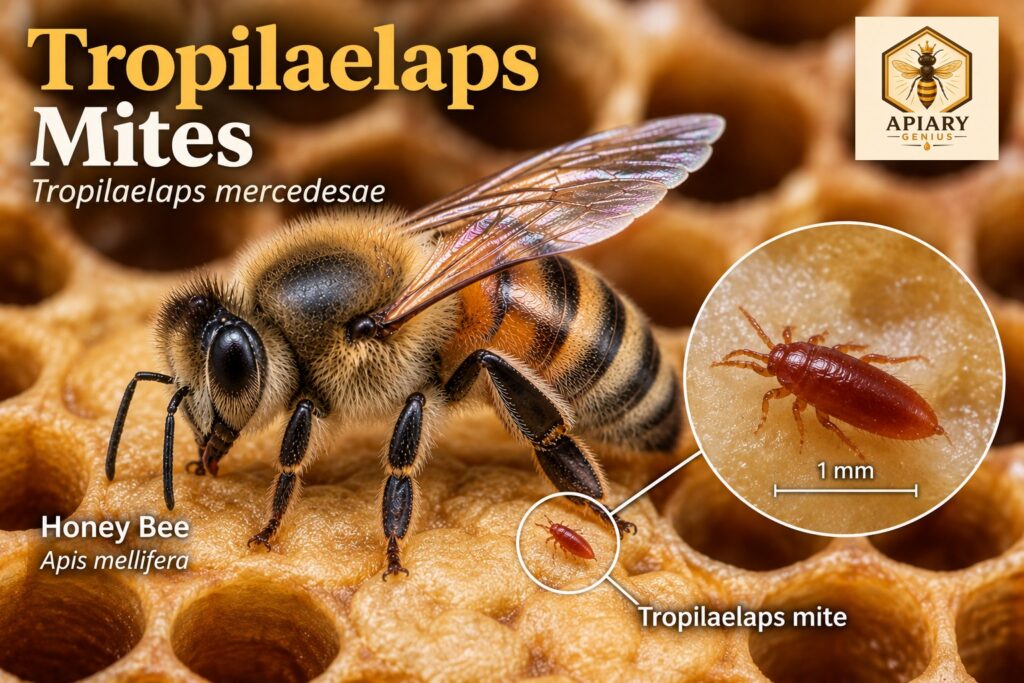
Tropilaelaps Mites in Honey Bees: Identification, Symptoms, Spread, and Management
Tropilaelaps mites are parasitic mites of honey bees that deserve close attention from beekeepers—even in places where they have not […]
Tropilaelaps mites are parasitic mites of honey bees that deserve close attention from beekeepers—even in places where they have not […]
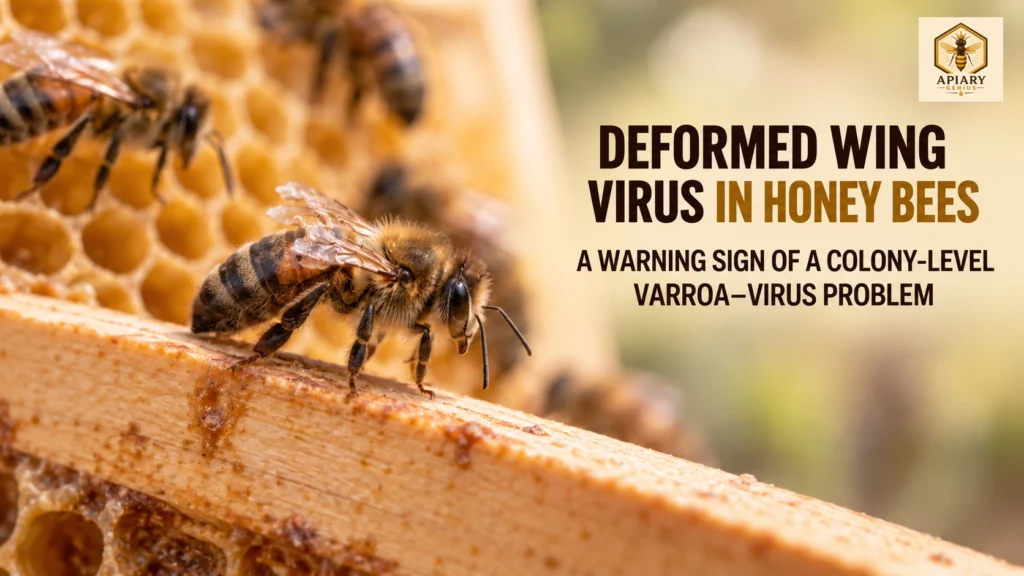
Deformed wing virus in honey bees is best known for producing workers with shriveled, shortened, or malformed wings. However, the
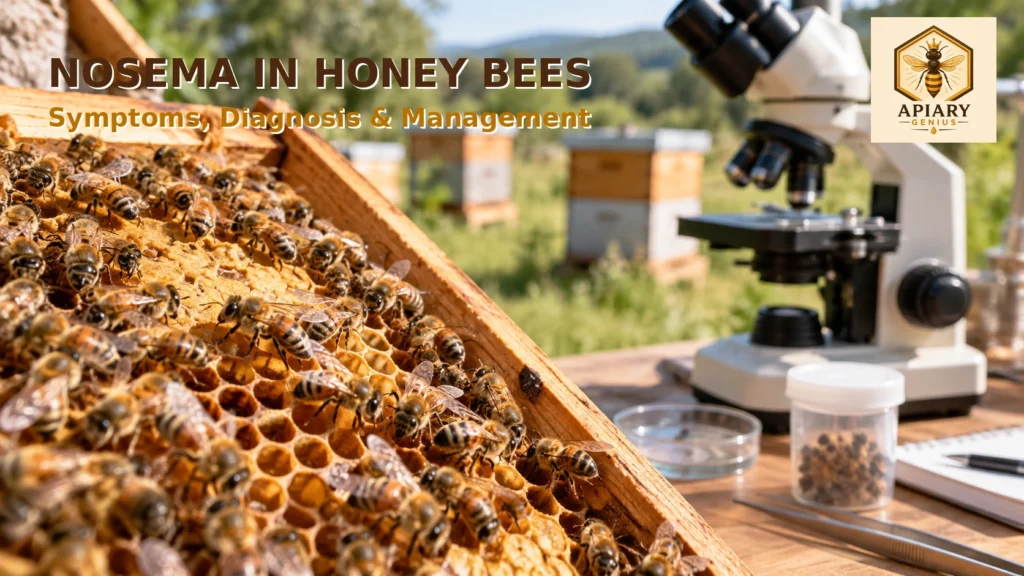
Nosema in honey bees can be difficult to recognize because the signs you see at the hive rarely provide a
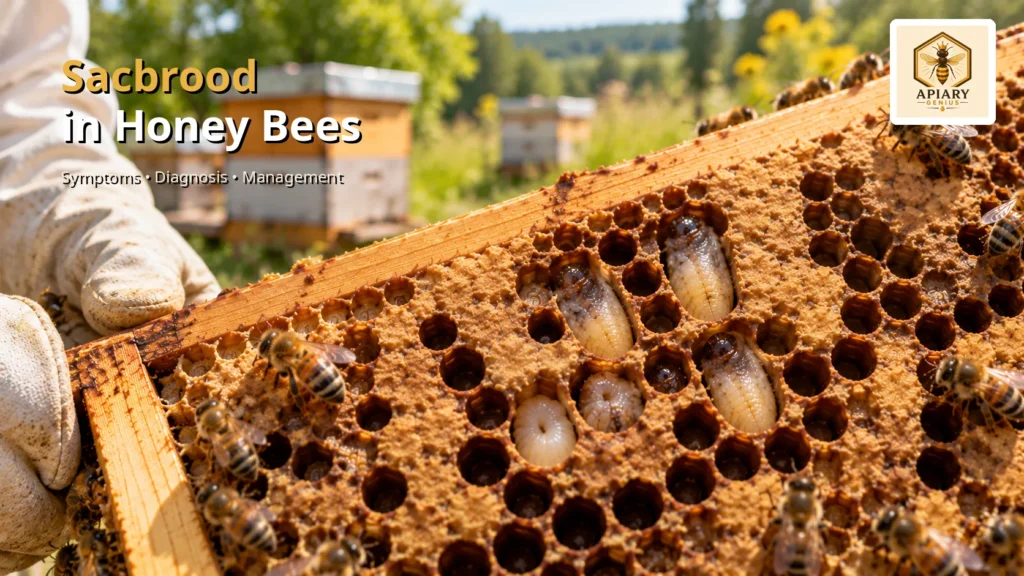
Finding dead, discolored, or strangely positioned larvae in a brood nest can be alarming. One possible cause is sacbrood, a
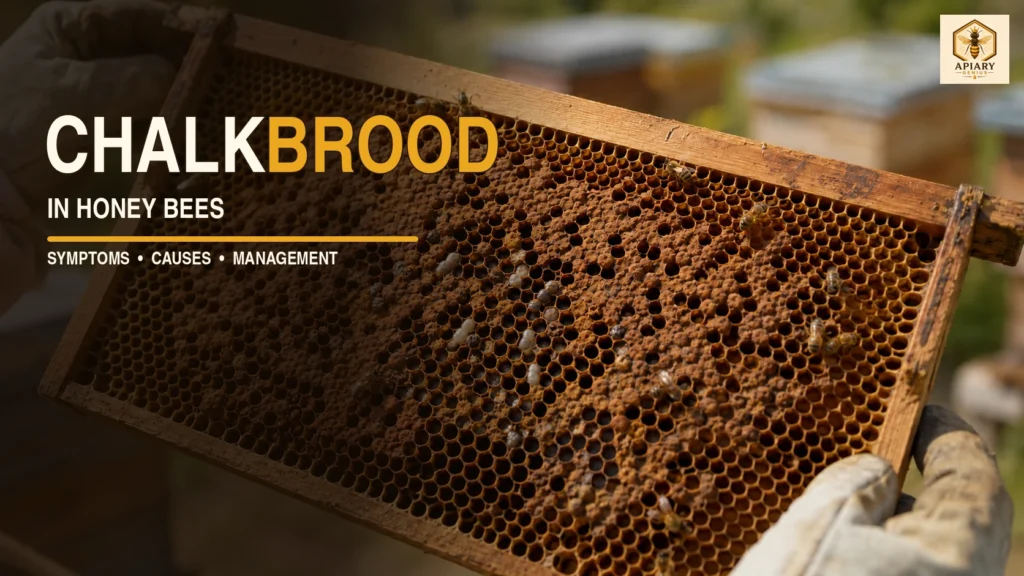
Finding small white, gray, mottled, or black objects in brood cells—or scattered across the bottom board and near the hive
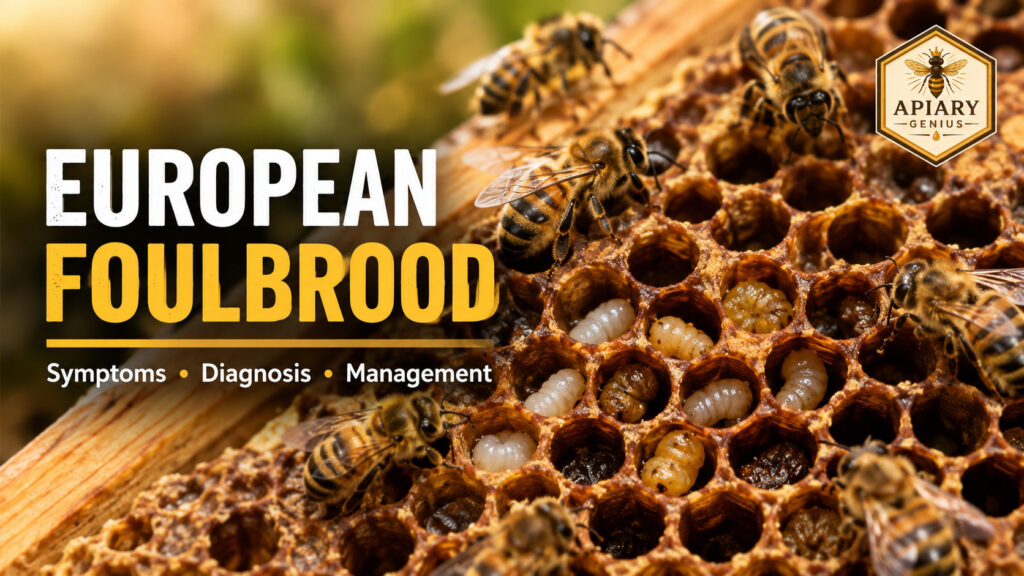
European foulbrood is a bacterial disease of honey bee brood that can range from a limited, temporary problem to a
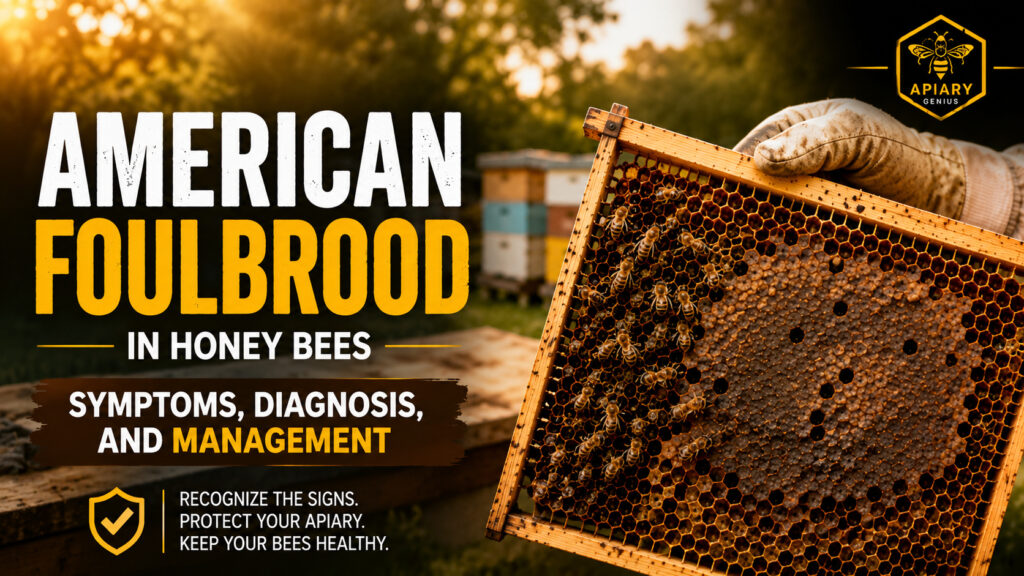
American foulbrood is one of the most serious bacterial diseases affecting honey bee brood. It can begin with only a
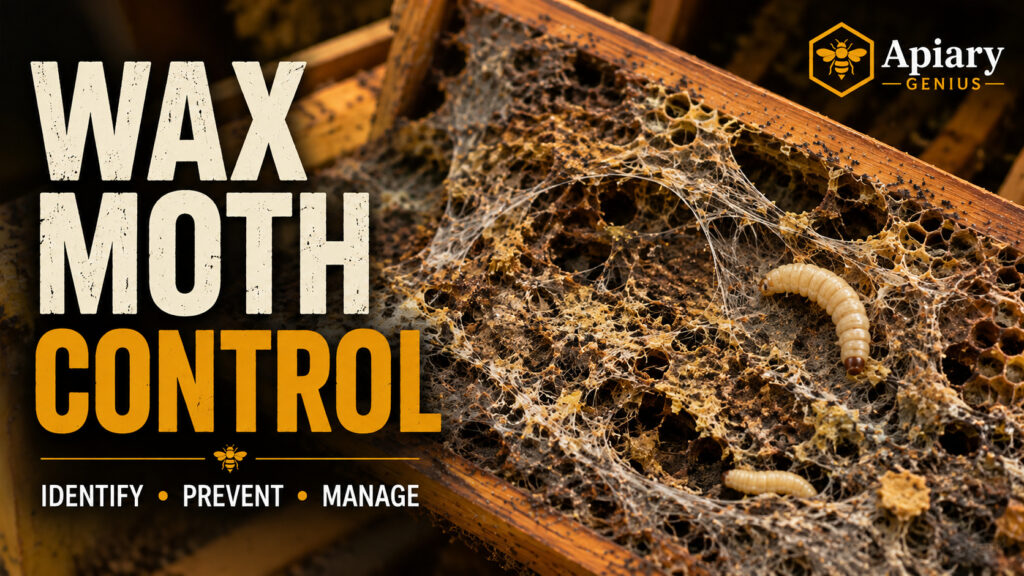
Finding webbing, tunnels, damaged comb, or pale caterpillar-like larvae inside a hive can be alarming. Wax moths can destroy valuable
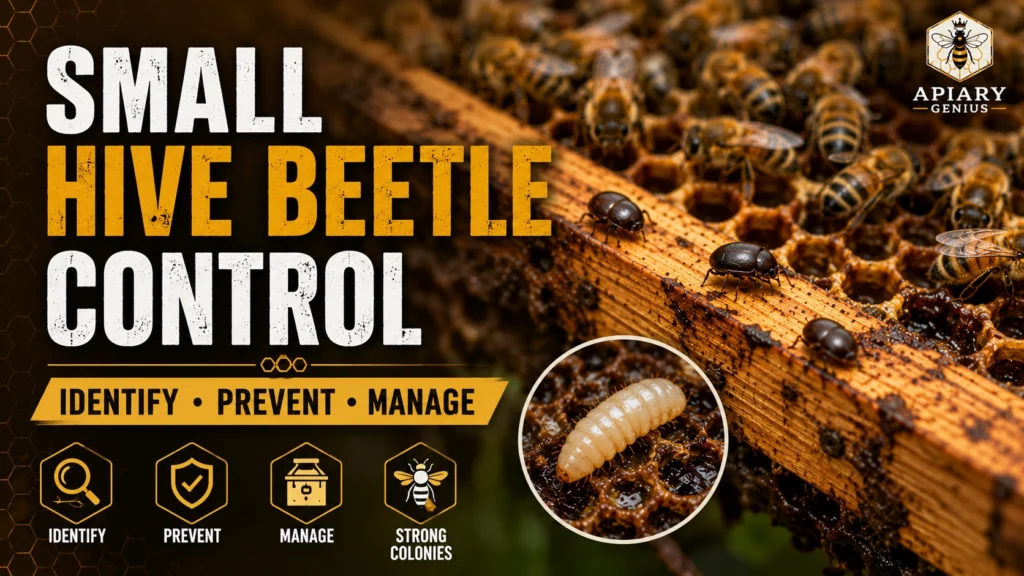
Finding small dark beetles running across a frame or disappearing into the corners of a hive can be unsettling, especially
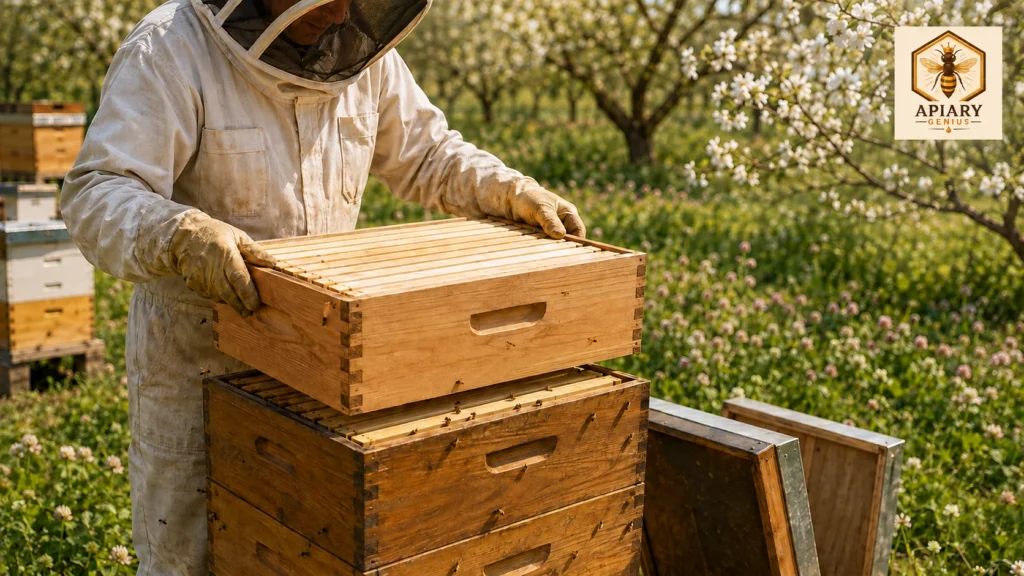
Knowing when to add a honey super helps a strong colony store incoming nectar before its working space becomes crowded.