
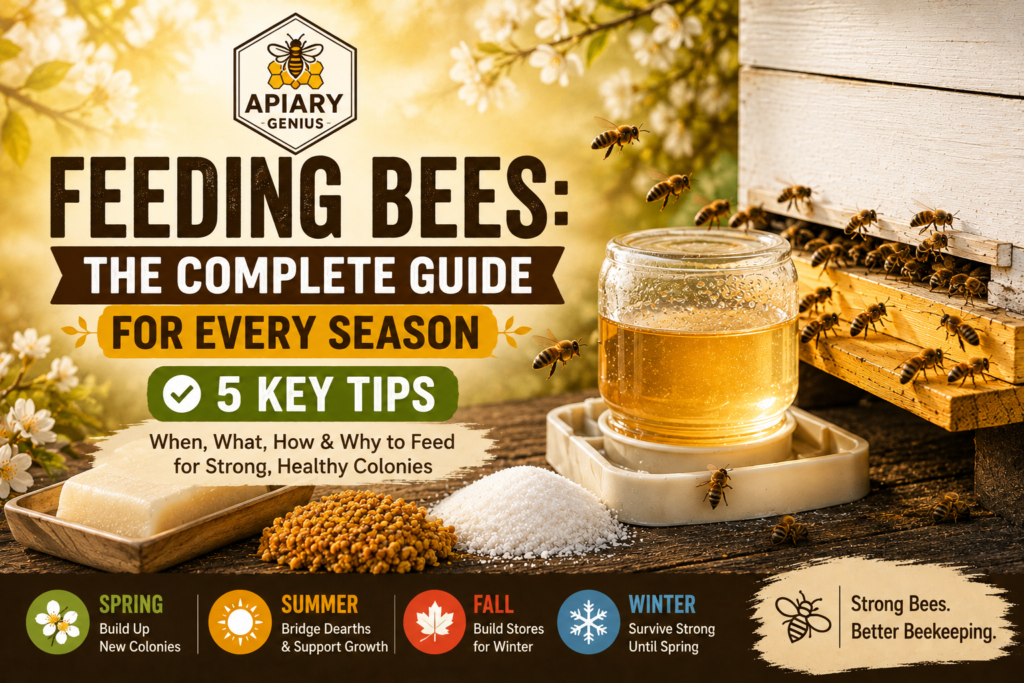
Feeding bees is one of the most misunderstood skills in beekeeping. New beekeepers often assume that once a hive is established, the bees can take care of themselves indefinitely. In reality, there are specific times of year — and specific situations — when feeding bees isn’t just helpful, it’s the difference between a thriving colony and a dead one by spring. This guide covers everything you need to know about feeding bees: why it matters, when to do it, what to use, how to do it correctly, and how to avoid the mistakes that trip up even experienced beekeepers.
Table of Contents
Why Feeding Bees Matters
In a perfect world, a honey bee colony collects enough nectar and pollen throughout spring and summer to sustain itself through fall and winter without any help. But the “perfect world” rarely exists. Weather swings, late frosts, droughts, urban development that removes forage, and the simple fact that new colonies haven’t built up stores yet all mean that feeding bees becomes a necessary part of responsible hive management.
Feeding bees supplements what nature isn’t providing at that moment. It’s not about replacing natural forage — bees always prefer real nectar and pollen over any artificial substitute — but about bridging gaps so the colony doesn’t starve, stall its brood production, or collapse when conditions turn unfavorable. A beekeeper who understands feeding bees well can nurse a struggling colony back to strength, push a new package into a productive first season, and virtually guarantee a hive survives winter with enough stores in reserve.
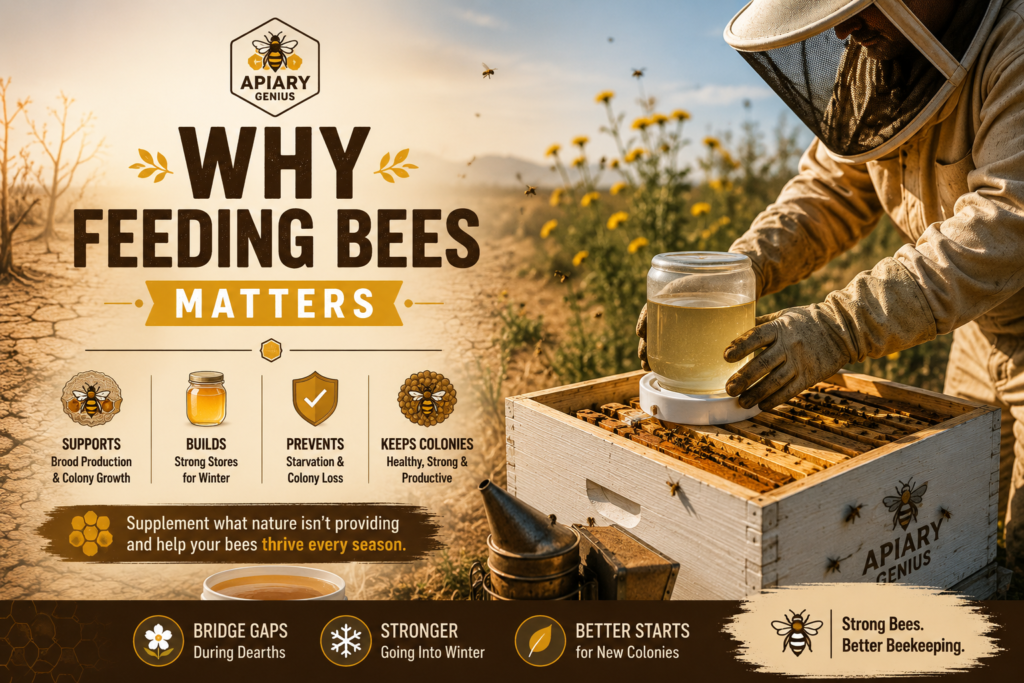
It’s also worth understanding what feeding bees is not. It isn’t a replacement for good forage planning, mite control, or proper ventilation. Colonies that are fed heavily but are also fighting disease, poor queens, or overwhelming pest pressure will still struggle. Feeding bees works best as one tool among several, used at the right moments rather than as a constant crutch.
When Feeding Bees Is Necessary
Knowing when to feed matters just as much as knowing how. Feeding bees at the wrong time can do more harm than good, so beekeepers need to recognize the specific windows where supplemental feeding makes sense.
1. New Packages and Nucs
A newly installed package or nuc has no comb, no stored honey, and no foraging workforce built up yet. Feeding bees a 1:1 sugar syrup during the first few weeks helps the colony draw out comb quickly and gives the queen the resources she needs to start laying at a strong rate. Without this early boost, a new colony can fall behind and struggle to build enough strength before winter arrives.
Most beekeepers continue feeding bees at this stage until the colony has drawn out most of the frames in the brood box, or until a natural nectar flow begins and the bees start ignoring the syrup on their own. This can take anywhere from two to six weeks depending on your local climate and the strength of the package.
If you’re setting up your first colony, see our complete guide on how to start beekeeping.
2. Spring Buildup
Early spring is a critical stretch. The queen is ramping up egg-laying, but natural nectar flow hasn’t fully started yet in many regions. This mismatch between growing hunger and limited forage is called a “spring dearth,” and it’s one of the most common times beekeepers rely on feeding bees to keep the colony from stalling out just as it should be expanding.
During spring buildup, colonies that emerged from winter light on stores are especially vulnerable. A hive can survive the coldest part of winter only to starve in early spring because brood rearing resumed and consumption spiked before forage caught up. Checking hive weight in late winter and being ready to start feeding bees at the first sign of a light hive can prevent this exact scenario.
3. Nectar Dearths in Summer
Depending on your region, mid-to-late summer often brings a dearth — a period when flowering plants slow down and nectar becomes scarce, even though temperatures are high and the colony’s population is at its peak. Feeding bees lightly during a dearth prevents the colony from consuming its own honey reserves too early and reduces the risk of robbing between hives, since hungry, food-stressed colonies are far more likely to raid weaker neighbors.
Summer dearths vary widely by climate. In hot, dry regions, a dearth might stretch for six to eight weeks in the middle of summer. In more temperate areas, it might only last a couple of weeks between the spring and fall nectar flows. Knowing your local dearth pattern is one of the most useful pieces of region-specific knowledge a beekeeper can build up over time.
4. Fall Preparation for Winter
This is the single most important feeding window of the year. Bees need enough capped stores — generally 40 to 60+ pounds of honey depending on climate — to survive winter without starving. If a hive feels light going into fall, feeding bees a heavier 2:1 sugar syrup helps them build up reserves before temperatures drop too low for the bees to process syrup efficiently.
Fall feeding bees should start early enough that the colony has time to take down the syrup, dehydrate it to the correct moisture content, and cap it before cold weather sets in. Waiting until the first frost is often too late — bees slow their syrup uptake dramatically once nighttime temperatures drop into the 50s Fahrenheit (around 10°C), so the feeding window typically needs to close by mid-to-late fall in most temperate climates.
5. Emergency Situations
Sometimes a colony simply runs low unexpectedly — a long cold snap, a failed nectar flow, or a late spring can leave a hive dangerously light. Signs of starvation include bees found dead head-first in empty cells, a noticeably light hive when you heft it from behind, and reduced or erratic brood patterns. In these cases, emergency feeding bees with fondant or dry sugar (rather than liquid syrup, which bees struggle to process in cold weather) can save the colony within days.
Types of Bee Feed
Not all bee feed is the same, and choosing the right type depends on the season, the temperature, and the reason you’re feeding.
Sugar Syrup
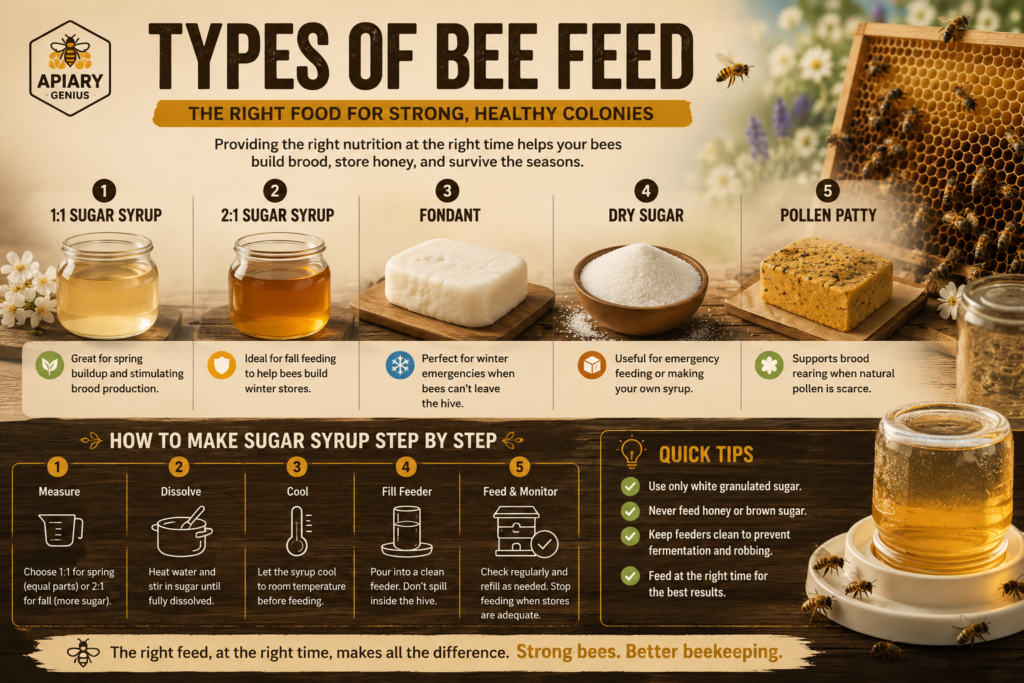
Sugar syrup is the most common method of feeding bees and comes in two main ratios:
- 1:1 syrup (one part sugar to one part water) — used in spring and for new colonies. The thinner consistency mimics nectar and encourages comb building and brood rearing.
- 2:1 syrup (two parts sugar to one part water) — used in fall. The thicker syrup requires less work for the bees to dehydrate and store, since it more closely resembles the density of finished honey.
For more guidance on seasonal sugar syrup ratios and supplemental feeding, see the University of Arizona Cooperative Extension guide to feeding bees.
Only use plain white granulated sugar. Never use brown sugar, powdered sugar, molasses, or unrefined sugars — these contain compounds that are difficult for bees to digest and can cause dysentery, a serious digestive illness in confined winter clusters. Some beekeepers add a small amount of apple cider vinegar or a pinch of sea salt to syrup, believing it helps prevent fermentation and supports gut health, though this remains more folk practice than proven science.
How to Make Sugar Syrup: Step by Step
- Heat water until warm (not boiling — boiling can caramelize the sugar and create compounds harmful to bees).
- Remove from heat and add sugar gradually, stirring continuously until fully dissolved and the liquid runs clear.
- Allow the syrup to cool completely to room temperature before feeding.
- Store any extra syrup in a sealed container in the refrigerator for no more than one to two weeks, since sugar syrup can ferment or grow mold at room temperature.
- Fill your chosen feeder and check it every few days, refilling and cleaning as needed.
Fondant and Sugar Candy
Fondant (a firm, moldable sugar paste) and candy boards are ideal for late fall and winter feeding bees when temperatures are too low for liquid syrup. Bees can consume solid sugar directly without needing to evaporate excess water, which is important since they can’t regulate hive humidity well in cold weather. Fondant is typically placed directly above the winter cluster so bees can reach it without traveling far from their warmth.
Dry Sugar (Mountain Camp Method)
The “mountain camp” method involves placing a layer of dry granulated sugar directly on newspaper above the brood nest, sometimes lightly misted with water to help it clump. This is a simple, low-cost emergency winter feeding option that many beekeepers keep on hand for cold-season emergencies, since it requires no cooking, no special equipment, and can be applied in minutes even in cold weather.
Pollen Substitute and Pollen Patties
While syrup addresses carbohydrate needs, pollen substitutes address protein needs. Pollen patties are especially useful in early spring before natural pollen sources are abundant, since protein is essential for brood development and healthy nurse bees. Feeding bees pollen patties too early or too late in the year, however, can stimulate brood rearing at the wrong time — too early risks brood being raised before there’s enough forage or warmth to sustain it, while feeding too late in fall can encourage the colony to keep raising brood when it should be settling into winter cluster mode.
Feeder Types and How to Use Them
There are several feeder designs, each with pros and cons depending on your climate, hive setup, and how many colonies you’re managing.
- Entrance feeders: Simple jar-based feeders that attach at the hive entrance. Easy to monitor and refill, but they can attract robbing from other colonies and are less effective in cold weather since bees have to leave the cluster to reach them.
- Frame (division board) feeders: Hang inside the hive in place of a frame. They hold a good volume of syrup and keep feeding activity hidden from other colonies, but bees can occasionally drown if the feeder isn’t fitted with a floating ladder or screen.
- Hive-top feeders: Sit on top of the hive body, under the outer cover. These hold large volumes of syrup, minimize robbing risk, and are a favorite for feeding bees in bulk during fall buildup.
- Pail (bucket) feeders: Inverted buckets with fine mesh lids placed directly over the inner cover hole. Efficient for large quantities and commonly used by commercial beekeepers managing many hives at once.
- Candy boards and fondant trays: Placed directly above the cluster in winter, allowing bees to access solid feed without breaking cluster to travel far.
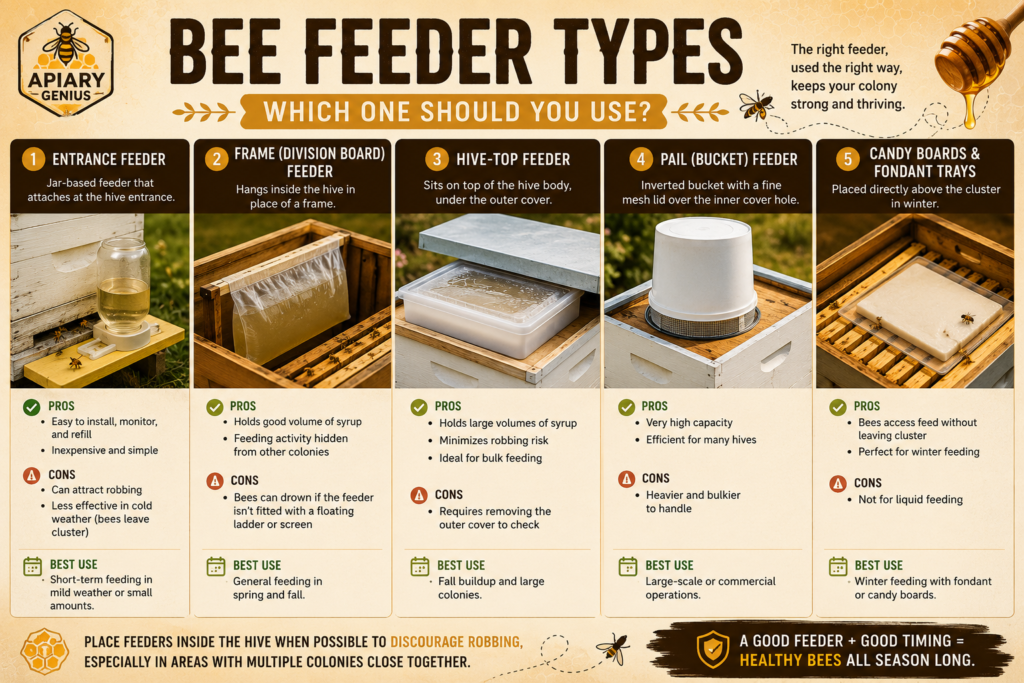
Whichever feeder you choose, always place it in a way that discourages robbing — ideally inside the hive rather than at the entrance, especially in areas with multiple colonies close together.
A Step-by-Step Walkthrough: Feeding Your Bees
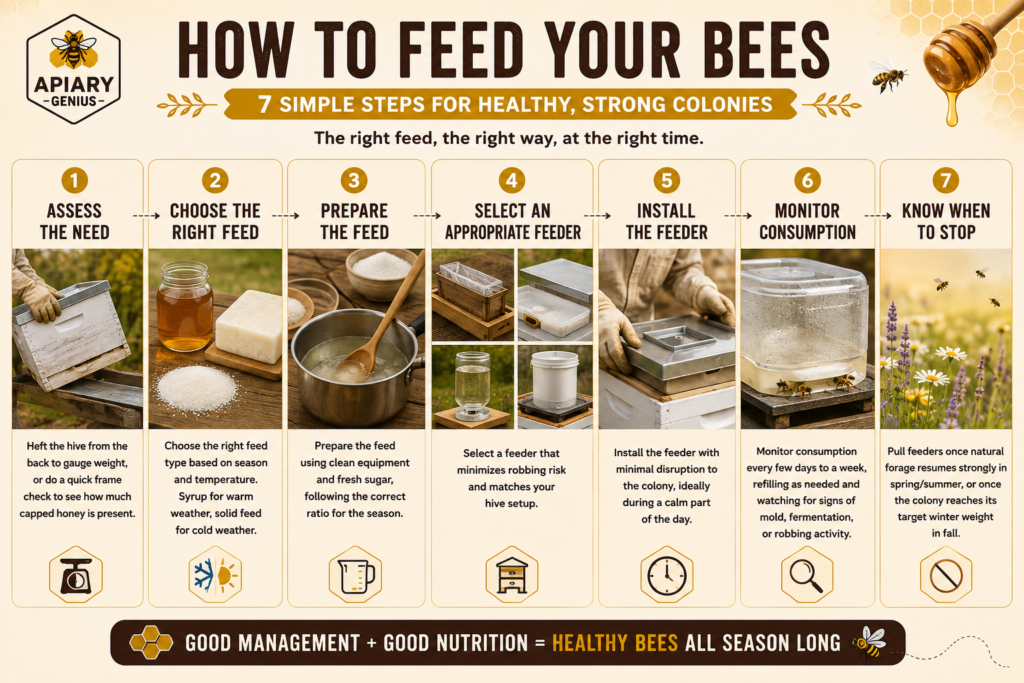
- Assess the need. Heft the hive from the back to gauge weight, or do a quick frame check to see how much capped honey is present.
- Choose the right feed type based on season and temperature — syrup for warm weather, solid feed (fondant or dry sugar) for cold weather.
- Prepare the feed using clean equipment and fresh sugar, following the correct ratio for the season.
- Select an appropriate feeder that minimizes robbing risk and matches your hive setup.
- Install the feeder with minimal disruption to the colony, ideally during a calm part of the day.
- Monitor consumption every few days to a week, refilling as needed and watching for signs of mold, fermentation, or robbing activity.
- Know when to stop — pull feeders once natural forage resumes strongly in spring/summer, or once the colony reaches its target winter weight in fall.
Common Mistakes When Feeding Bees
Even well-intentioned feeding can backfire if done incorrectly. Here are the most frequent mistakes beekeepers make:
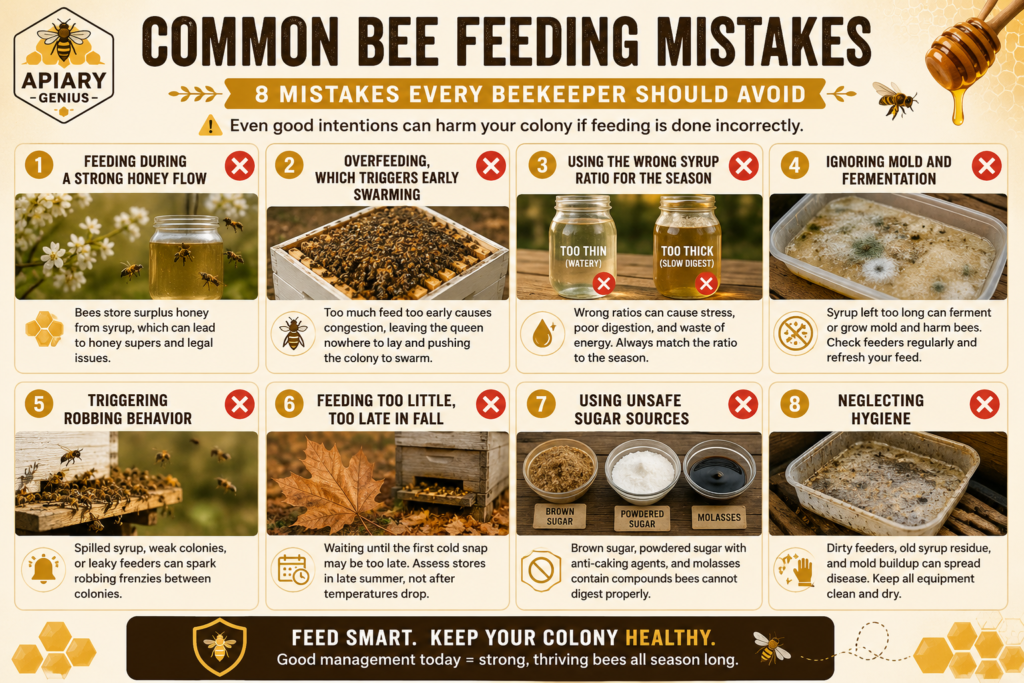
- Feeding during a strong honey flow. Sugar syrup fed while bees are actively storing surplus honey can end up mixed into honey supers, which is both a food-safety issue and, in many regions, illegal for honey sold commercially. Stop feeding before adding honey supers you intend to harvest from.
- Overfeeding, which triggers early swarming. A colony that’s fed too heavily too early in spring can become congested with syrup stores, leaving the queen with nowhere to lay and pushing the colony toward swarming. Feed enough to support buildup, not so much that it crowds the brood nest.
- Using the wrong syrup ratio for the season. Thin 1:1 syrup fed in cold fall weather forces bees to work harder evaporating excess water at a time when they need to conserve energy — always match your ratio to the season.
- Ignoring mold and fermentation. Syrup left too long, especially in warm, humid conditions, can ferment or grow mold. Check and refresh feeders regularly, and never feed syrup that smells off or has visible mold.
- Triggering robbing behavior. Spilled syrup around the hive entrance, weak colonies fed in the open, or leaky feeders can trigger robbing frenzies between colonies. Clean up spills immediately and use robbing screens if needed.
- Feeding too little, too late in fall. Waiting until the first cold snap to check whether a colony needs feeding often means it’s too late for the bees to process liquid syrup efficiently. Assess stores in late summer, not after temperatures have already dropped.
- Using unsafe sugar sources. Brown sugar, powdered sugar with anti-caking agents, and molasses all contain compounds bees cannot digest properly. Stick to plain white granulated sugar for any syrup or dry feeding.
- Neglecting hygiene. Dirty feeders, old syrup residue, and mold buildup can spread disease between feeding sessions. Clean feeders thoroughly before refilling, especially between colonies.
Signs Your Bees Need Feeding
Learning to read a colony’s condition is a core beekeeping skill, and it directly informs your feeding bees decisions:
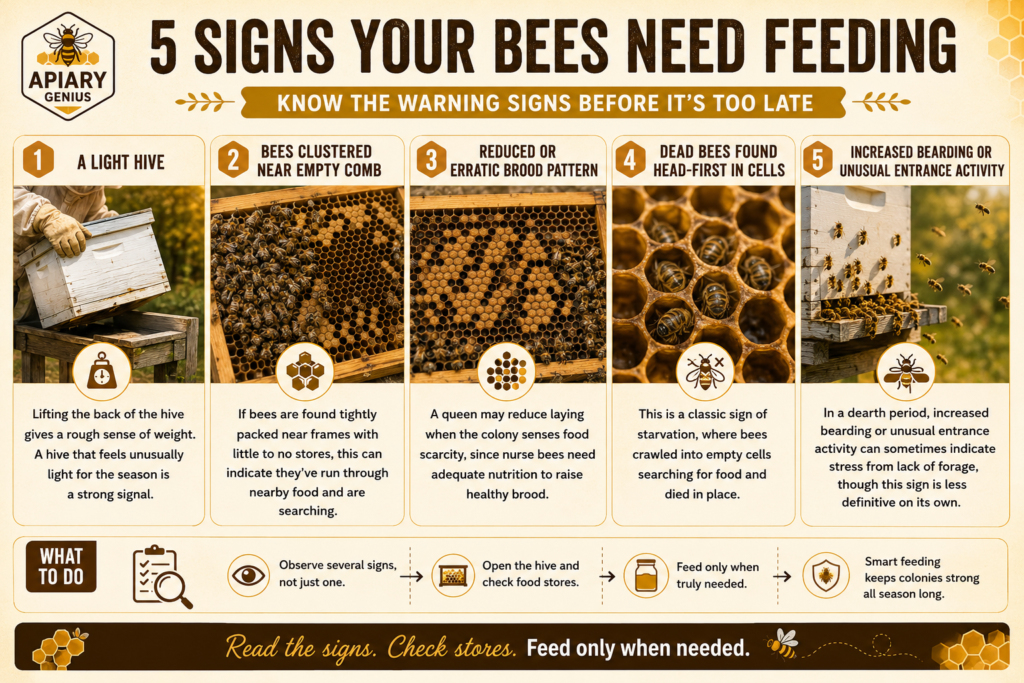
- A light hive. Lifting the back of the hive gives a rough sense of weight — a hive that feels unusually light for the season is a strong signal.
- Bees clustered near empty comb. If bees are found tightly packed near frames with little to no stores, this can indicate they’ve run through nearby food and are searching.
- Reduced or erratic brood pattern. A queen may reduce laying when the colony senses food scarcity, since nurse bees need adequate nutrition to raise healthy brood.
- Dead bees found head-first in cells. This is a classic sign of starvation, where bees crawled into empty cells searching for food and died in place.
- Increased bearding or unusual entrance activity in a dearth period can sometimes indicate stress from lack of forage, though this sign is less definitive on its own.
Regional and Climate Considerations
Feeding bees isn’t one-size-fits-all — climate plays a major role in shaping your feeding calendar. In colder northern climates with long winters, fall feeding bees needs to start earlier and aim for higher total stores, since the broodless winter period is longer and forage doesn’t return until later in spring. In warmer southern or subtropical climates, dearths can occur in the height of summer instead of winter, and colonies may need light feeding during hot, dry stretches rather than heavy fall feeding. Beekeepers in Mediterranean-type climates, similar to much of the Middle East and North Africa, often see two dearth periods — one in the driest part of summer and occasionally a shorter one in late winter before spring bloom — making it useful to keep both syrup and solid feed on hand year-round.
Frequently Asked Questions About Feeding Bees
How long should I keep feeding bees a new package?
Most beekeepers continue feeding a new package until it has drawn out the majority of its brood box frames, which typically takes several weeks depending on conditions and local forage.
Can I feed bees honey instead of sugar syrup?
Feeding bees honey from an unknown source carries a real risk of spreading diseases like American foulbrood. If you must feed honey, only use honey from your own disease-free hives.
Will feeding bees change the taste of my honey?
As long as you stop feeding before adding honey supers meant for harvest, feeding bees syrup earlier in the season won’t affect the flavor of your surplus honey crop.
Is it normal for bees to ignore syrup during a strong nectar flow?
Yes — bees will always prioritize fresh natural nectar over syrup when it’s abundantly available, which is actually a good sign that feeding is no longer necessary at that moment.
How do I know when to stop feeding bees in fall?
Stop once the colony reaches your target winter weight for your climate, or once bees clearly stop taking down syrup as temperatures drop.
A Seasonal Feeding Bees Checklist
To keep things simple, here’s a quick reference for feeding bees throughout the year:
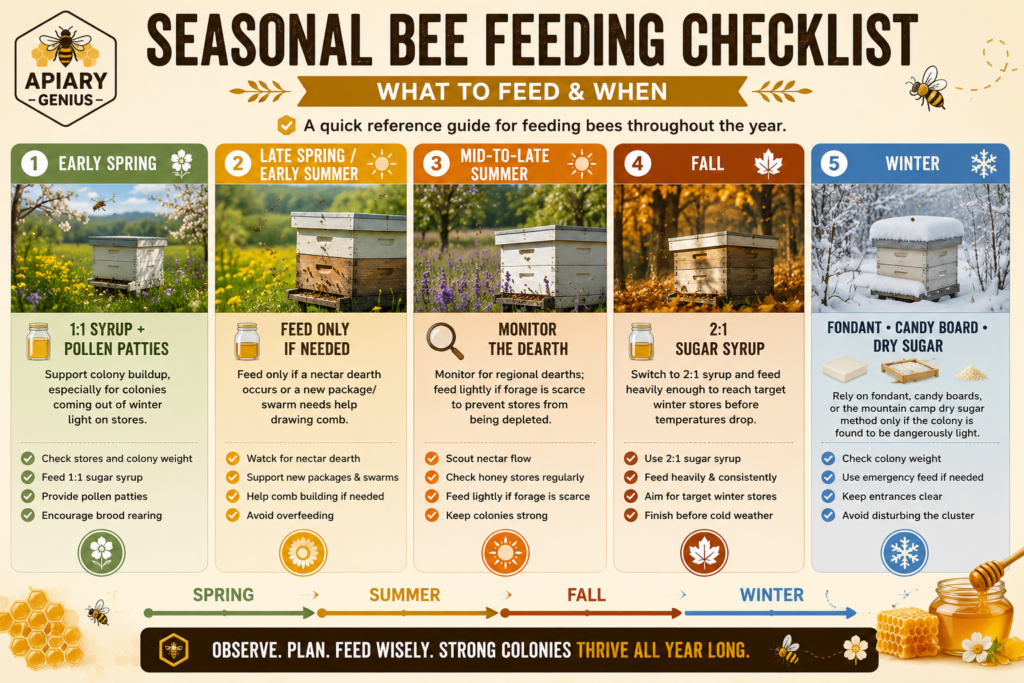
- Early Spring: 1:1 syrup + pollen patties to support buildup, especially for colonies coming out of winter light on stores.
- Late Spring / Early Summer: Feed only if a nectar dearth occurs or a new package/swarm needs help drawing comb.
- Mid-to-Late Summer: Monitor for regional dearths; feed lightly if forage is scarce to prevent stores from being depleted.
- Fall: Switch to 2:1 syrup and feed heavily enough to reach target winter stores before temperatures drop below the point where bees can process liquid feed.
- Winter: Rely on fondant, candy boards, or the mountain camp dry sugar method only if the colony is found to be dangerously light.
Final Thoughts
Feeding bees isn’t a sign that something has gone wrong — it’s a normal, often essential part of responsible beekeeping, especially for new colonies, regions with harsh winters, or years with unpredictable weather. The key is understanding the “why” behind each feeding window: supporting buildup in spring, bridging dearths in summer, and securing winter survival in fall. Get the timing, ratio, and feeder choice right, and feeding bees becomes one of the simplest tools in your beekeeping toolkit for keeping colonies strong, healthy, and productive year after year.