
How to control varroa mites effectively is essential for protecting honey bee colonies from one of their most destructive parasites.
Varroa mites are one of the biggest threats to honey bee colonies worldwide. These tiny parasites weaken bees, spread harmful viruses, reduce honey production, and can eventually cause an entire colony to collapse if left untreated.
The good news is that many beekeepers successfully reduce mite populations without relying entirely on harsh chemical treatments. By combining regular hive inspections, proper colony management, drone brood removal, screened bottom boards, and healthy beekeeping practices, you can significantly lower the risk of serious infestations.
In this complete guide, you’ll learn how to prevent varroa mites naturally, recognize the early warning signs, monitor mite levels correctly, and apply effective natural management techniques that help keep your bees healthy throughout the year.
Table of Contents
Why Varroa Mites Are Dangerous
Varroa mites are considered the most destructive parasite affecting honey bee colonies worldwide. These tiny reddish-brown mites attach themselves to both adult bees and developing brood, feeding on their body fat tissue, which is esskential for energy storage, immunity, and overall health. As the infestation grows, colonies become weaker, less productive, and far more vulnerable to disease.
One of the greatest dangers of varroa mites is their ability to spread harmful viruses. They act as vectors for dozens of bee viruses, including the well-known Deformed Wing Virus (DWV), which causes newly emerged bees to develop shriveled wings, shortened lifespans, and reduced ability to forage. Even colonies that appear healthy can collapse rapidly once virus levels increase.
Unlike many other hive pests, varroa mites reproduce inside capped brood cells. Female mites enter a brood cell just before it is sealed and lay several eggs while the developing bee is still inside. By the time the young bee emerges, multiple mature mites leave the cell and continue spreading throughout the colony. This rapid reproductive cycle allows mite populations to increase dramatically within only a few weeks.
The damage caused by varroa mites is not always obvious during the early stages of infestation. Many colonies continue collecting nectar and pollen while mite numbers quietly rise. Because of this, beekeepers who rely only on visible symptoms often discover the problem too late, when the colony has already suffered significant losses.
Heavy infestations weaken worker bees, shorten their lifespan, reduce brood quality, and place additional stress on the queen. As the number of healthy workers declines, essential colony activities such as brood care, hive maintenance, temperature regulation, and food collection become increasingly difficult. This creates a cycle of declining colony strength that can eventually lead to colony collapse.
The risk becomes even greater during late summer and autumn. At this time of year, mite populations usually reach their highest levels while the colony begins raising the long-lived winter bees needed for survival. If these winter bees are heavily parasitized, the colony may fail to survive until spring, even if enough honey stores are available.
Fortunately, varroa mites can be managed successfully through early detection, regular monitoring, and natural integrated pest management practices. Understanding why these parasites are so dangerous is the first step toward protecting your bees and maintaining strong, healthy colonies throughout the year.
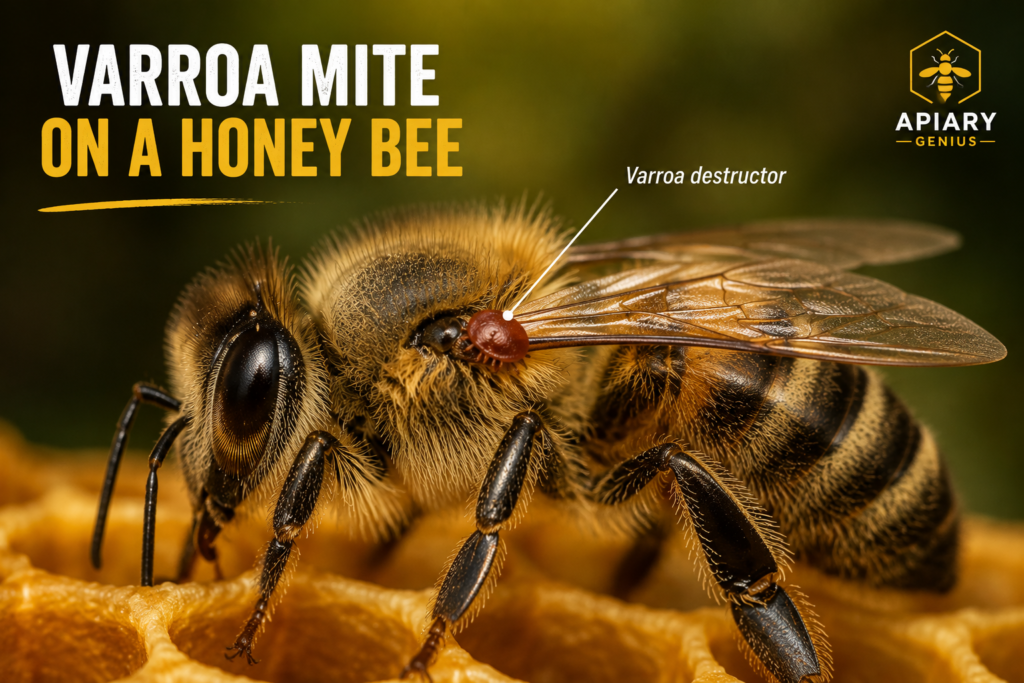
A close-up view of a varroa mite parasitizing a honey bee.
How to Identify Varroa Mites Early
Early detection is the key to preventing serious varroa infestations. The earlier you discover mites in your colony, the easier it is to control them before they weaken the bees or spread dangerous viruses. Waiting until visible damage appears often means the infestation has already reached harmful levels.
Many beginner beekeepers assume that seeing healthy adult bees means their colony is free of mites. Unfortunately, this is rarely true. Varroa mites spend much of their life hidden inside capped brood cells, making them difficult to detect without regular inspections and monitoring methods.
There are several warning signs that may indicate a growing mite population:
- Bees with deformed or shriveled wings.
- Spotty or irregular brood patterns.
- Crawling bees unable to fly.
- Reduced honey production.
- Increased numbers of dead bees near the hive entrance.
- Weak colony growth despite good nectar flow.
However, these symptoms usually appear after the infestation has already become serious. For this reason, experienced beekeepers rely on monitoring techniques instead of waiting for visible signs.
The most reliable monitoring methods include the alcohol wash, powdered sugar roll, sticky board counts, and uncapping drone brood to inspect developing bees. Performing these checks every few weeks during the active season helps identify problems before they become severe.
A good monitoring schedule also allows you to track changes in mite populations over time. Instead of reacting only when bees become weak, you can make informed management decisions based on accurate data and protect your colony before irreversible damage occurs.
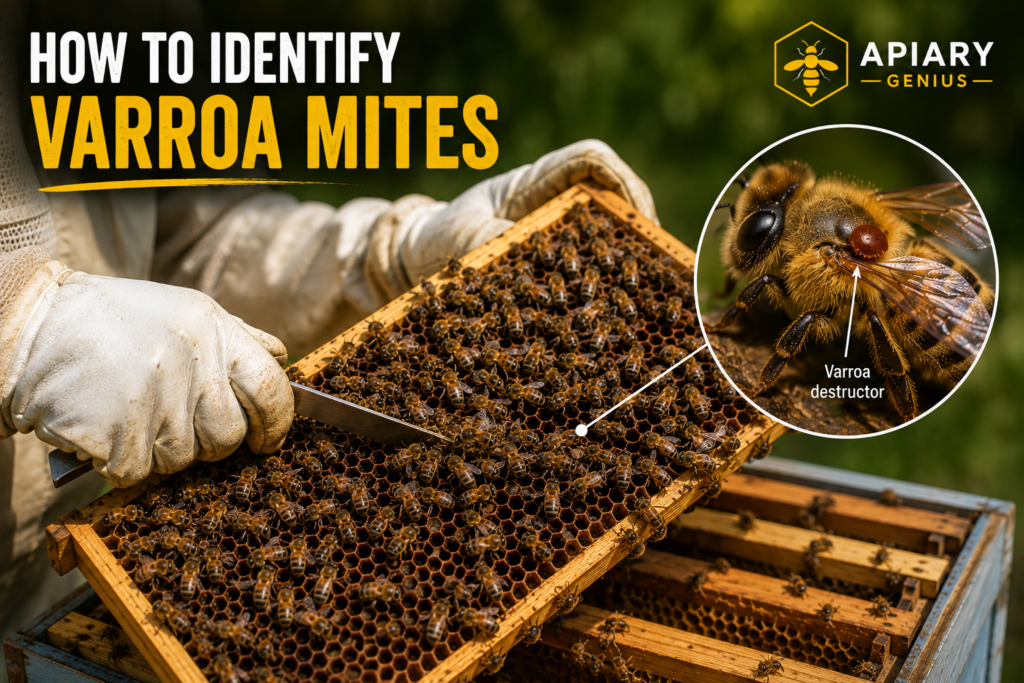
How to Control Varroa Mites: Best Natural Methods
Natural varroa mite control works best when several proven methods are combined instead of relying on a single solution. The goal is not to eliminate every mite completely but to keep mite populations below damaging levels while maintaining a healthy and productive colony. The following natural techniques are widely used by experienced beekeepers and can significantly reduce varroa pressure when applied consistently.
Drone Brood Removal
Drone brood removal is one of the most effective non-chemical techniques for reducing varroa mite populations. Female mites strongly prefer drone brood because drones remain capped for a longer period, giving mites more time to reproduce.
Beekeepers take advantage of this behavior by providing a dedicated drone comb. Once the cells are capped and filled with developing drones, the comb is removed and frozen before the mites can emerge. This interrupts the reproductive cycle and removes thousands of mites from the colony at once.
Although drone brood removal alone cannot completely control varroa mites, it is an excellent preventive method when combined with regular monitoring and other integrated pest management practices. Many professional beekeepers include this technique as part of their seasonal management routine.
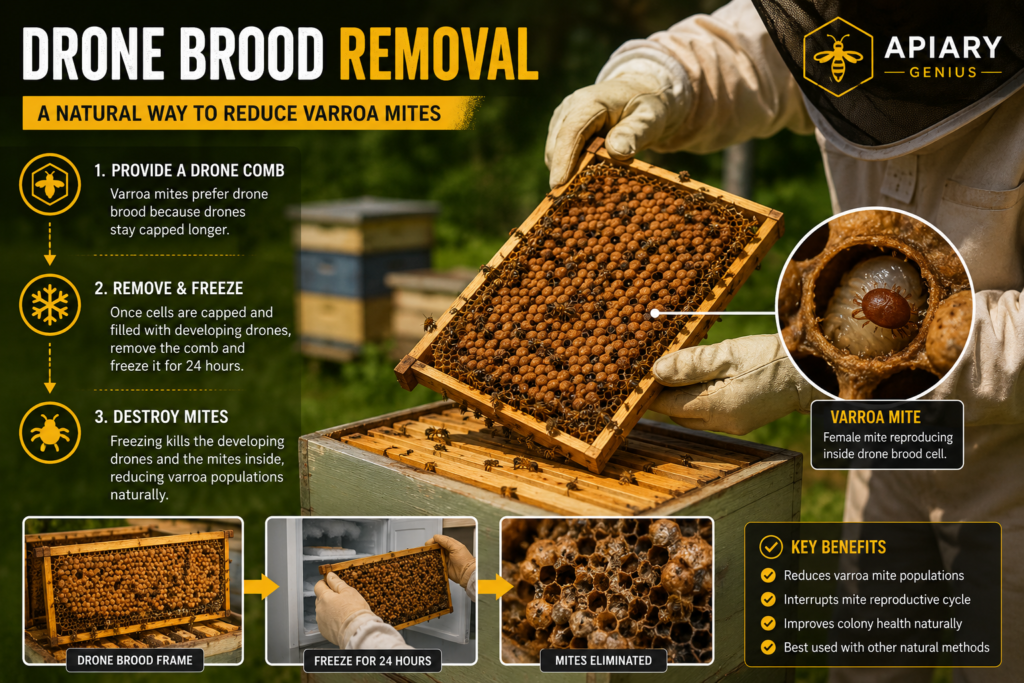
Drone brood removal naturally interrupts the varroa mite reproductive cycle and helps reduce infestations.
Screened Bottom Boards
Screened bottom boards are one of the simplest and most effective natural tools for managing varroa mites. Unlike solid hive floors, screened bottom boards allow some mites that naturally fall from adult bees to drop through the mesh instead of climbing back onto the colony. This helps reduce the overall mite population without using chemicals.
While screened bottom boards alone cannot eliminate varroa mites, they are an excellent part of an integrated pest management strategy. They improve hive ventilation, reduce moisture buildup, and make it easier to monitor natural mite fall using a sticky monitoring board placed beneath the screen.
During warm weather, screened bottom boards also help regulate hive temperature by improving airflow. Healthier environmental conditions reduce stress on the colony and support stronger bee populations that are better able to tolerate parasite pressure.
For the best results, combine screened bottom boards with regular mite monitoring, drone brood removal, and other natural control methods. Together, these techniques create a sustainable approach that helps keep mite populations below harmful levels throughout the beekeeping season.
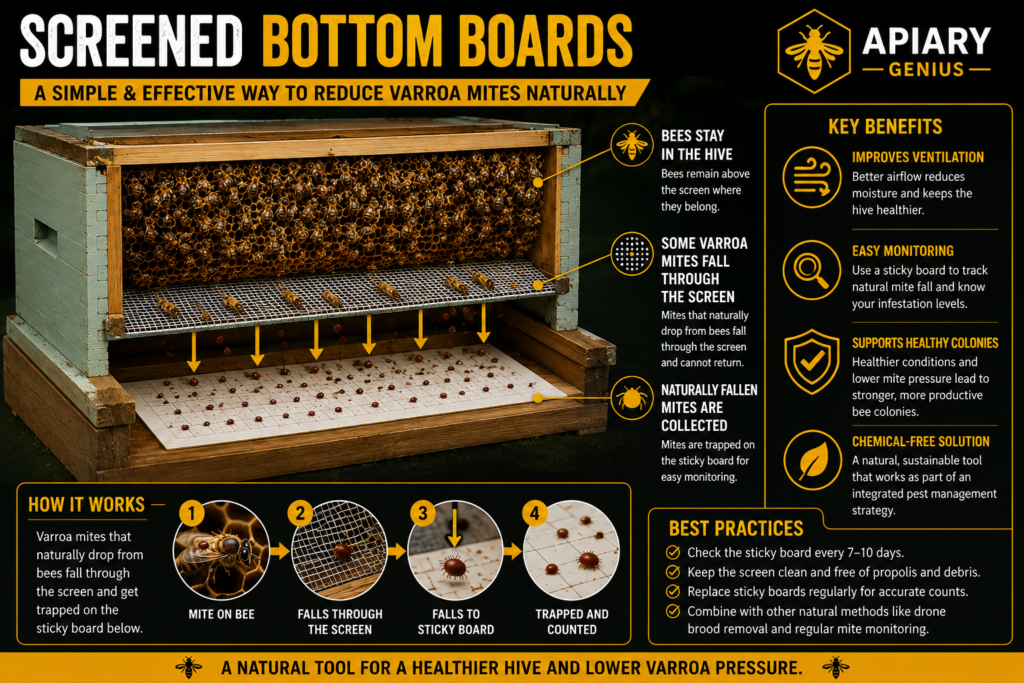
Screened bottom boards help reduce varroa mite pressure by allowing naturally fallen mites to drop away from the bee colony.
When combined with regular hive inspections, screened bottom boards become an effective long-term monitoring tool for managing varroa mites naturally.
Screened bottom boards help monitor naturally fallen varroa mites and improve hive ventilation, making them a valuable part of an integrated pest management strategy.
Powdered Sugar Dusting
Powdered sugar dusting is one of the oldest natural methods used to help manage varroa mites without chemicals. Instead of killing the mites directly, this technique encourages them to lose their grip on adult bees. As the bees groom themselves and each other after being coated with fine powdered sugar, many mites become dislodged and fall from the colony.
While powdered sugar dusting can temporarily reduce the number of mites on adult bees, it does not affect mites hidden inside capped brood cells where most reproduction takes place. For this reason, experienced beekeepers usually consider it a supportive management technique rather than a complete solution.
The treatment is simple to apply and does not leave chemical residues in honey or beeswax, making it attractive for hobby beekeepers and small apiaries. It is also inexpensive and can be repeated when necessary without harming healthy colonies if performed correctly.
However, powdered sugar dusting works best when combined with regular mite monitoring, screened bottom boards, drone brood removal, and other integrated pest management practices. Using several natural methods together provides better long-term control than relying on powdered sugar alone.
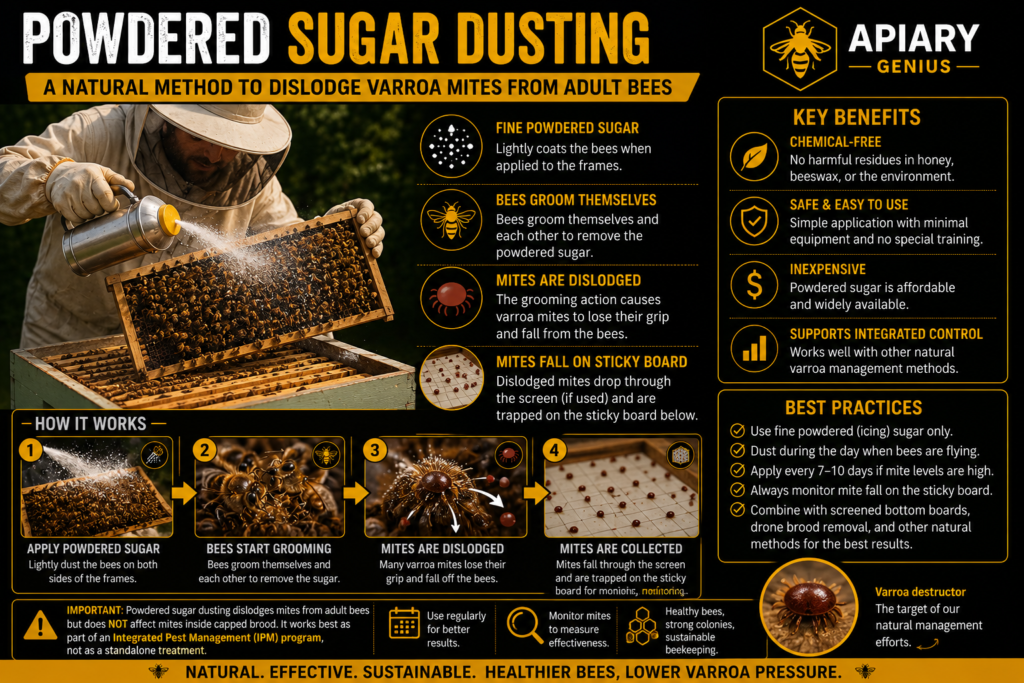
Powdered sugar dusting encourages bees to groom themselves, helping dislodge varroa mites naturally.
Brood Break (Queen Caging)
A brood break is one of the most effective natural strategies for reducing varroa mite populations. Since varroa mites reproduce inside capped brood cells, temporarily stopping brood production interrupts their life cycle and prevents many mites from reproducing. This technique is widely used by experienced beekeepers as part of an integrated pest management (IPM) program.
One common method is queen caging, where the queen is confined in a special cage for approximately 21 days. During this period, no new brood is produced while the existing brood gradually emerges. Without fresh brood cells available, varroa mites lose their primary breeding sites, making the population easier to control.
A brood break also creates an ideal opportunity to apply organic treatments such as oxalic acid, because most mites are then exposed on adult bees instead of hiding inside capped brood. This significantly improves treatment effectiveness while reducing the need for repeated chemical applications.
Although queen caging requires careful timing and colony management, it can greatly reduce varroa pressure when combined with regular monitoring, drone brood removal, screened bottom boards, and other natural control methods. Healthy colonies recover quickly and often enter the next season with stronger bee populations.
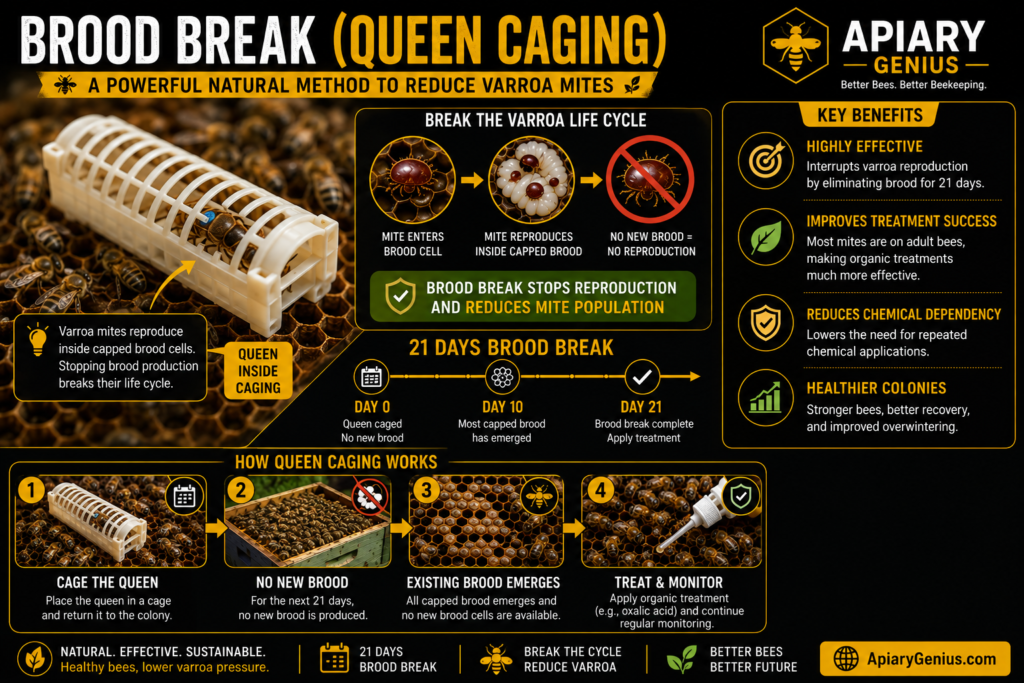
Queen caging creates a brood break that interrupts the varroa mite life cycle naturally.
Essential Oils for Varroa Control
Certain essential oils may help reduce varroa mite pressure when used as part of an integrated pest management strategy. Oils such as thymol, eucalyptus, menthol, and oregano have shown varying levels of effectiveness because their strong natural compounds interfere with mite activity. However, essential oils should never be considered a complete solution or a replacement for regular monitoring.
Thymol is one of the most widely studied natural substances for varroa control and is used in several commercial treatments. It works best when temperatures are within the recommended range, as very high or very low temperatures can reduce its effectiveness or increase stress on the colony.
Proper dosage is extremely important. Excessive amounts of essential oils may disturb the bees, reduce brood production, or even encourage colonies to abscond. Always follow the manufacturer’s instructions when using commercial thymol products and avoid experimenting with untested homemade concentrations.
Essential oils provide the best results when combined with drone brood removal, screened bottom boards, brood breaks, and regular mite monitoring. This integrated approach reduces the risk of mites developing resistance while helping maintain healthy and productive honey bee colonies throughout the season.
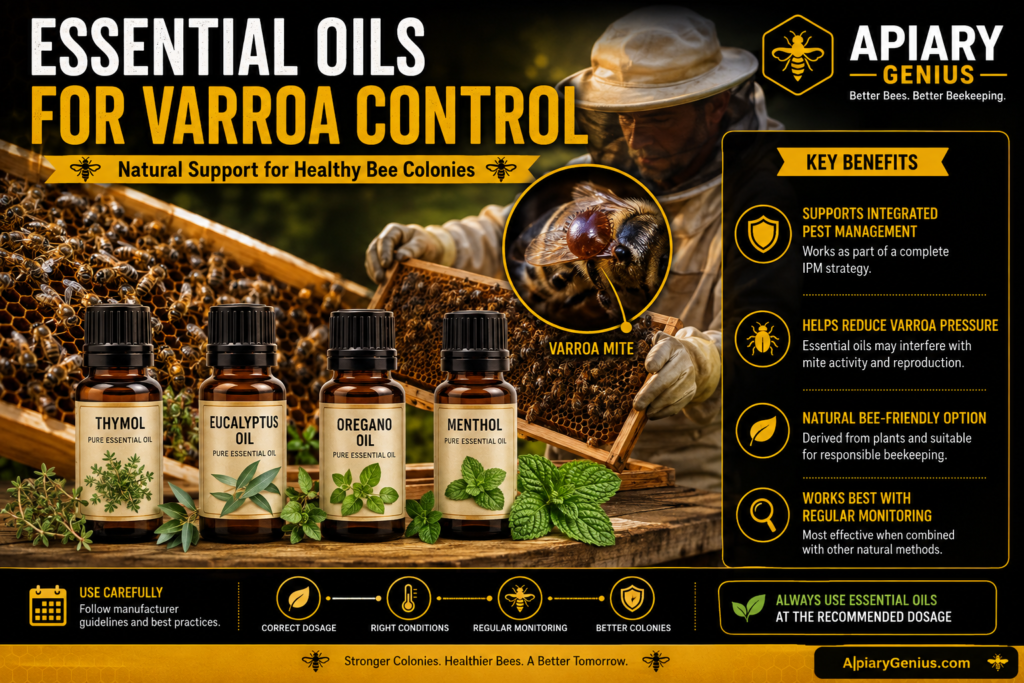
Essential oils can support natural varroa management when used with regular hive monitoring.
Chemical Treatments (When Natural Methods Are Not Enough)
While natural methods can significantly reduce varroa mite populations, they may not always provide enough control when infestations become severe. If mite levels remain above economic thresholds despite regular monitoring and integrated management, carefully selected chemical treatments may be necessary to prevent colony collapse. The goal is not to rely on chemicals permanently but to use them responsibly as part of a long-term integrated pest management strategy.
Modern beekeepers should always choose treatments based on accurate mite counts rather than applying medications on a fixed schedule. Unnecessary treatments increase costs, place additional stress on colonies, and may contribute to treatment resistance. By treating only when needed, beekeepers can protect both their bees and the long-term effectiveness of available products.
Before selecting any treatment, consider the season, colony strength, presence of honey supers, local regulations, and ambient temperature. Different products perform better under different conditions, and using the wrong treatment at the wrong time may reduce effectiveness or contaminate honey intended for harvest.
The following chemical treatments are among the most widely used and scientifically supported options for controlling varroa mites when natural methods alone are no longer sufficient.
Oxalic Acid
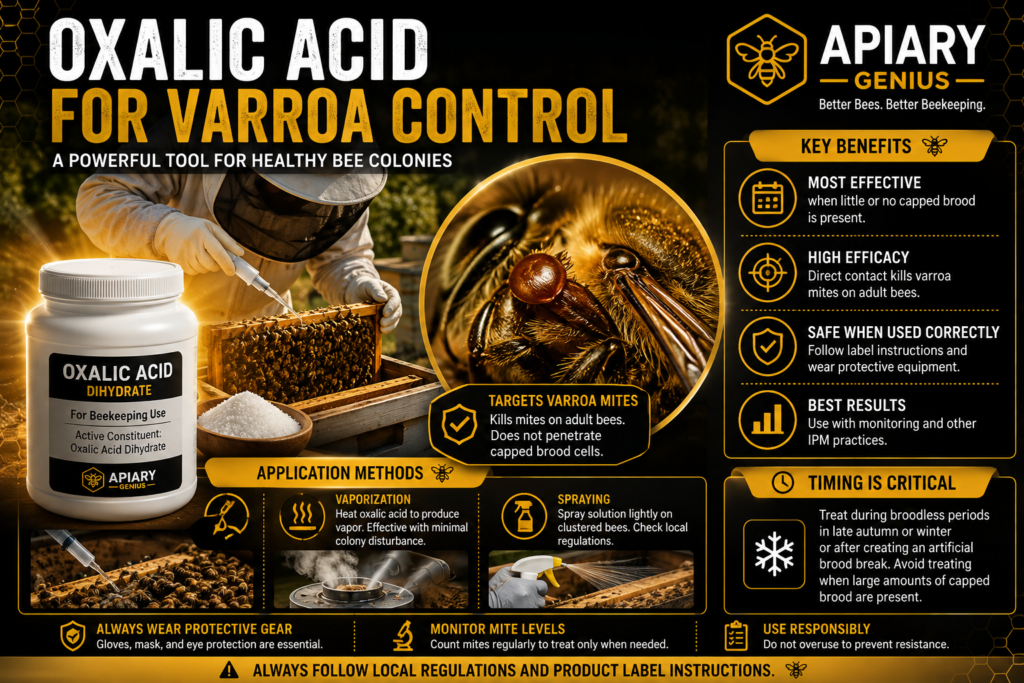
Oxalic acid is one of the most effective treatments for varroa mites when little or no capped brood is present. Because the acid only kills mites attached to adult bees and cannot penetrate capped brood cells, it works best during broodless periods in late autumn or winter. Many beekeepers also create an artificial brood break before treatment to improve effectiveness.
Oxalic acid can be applied by dripping, vaporization, or spraying, depending on local regulations and available equipment. Vaporization has become increasingly popular because it minimizes disturbance to the colony while providing excellent mite control when used correctly. Regardless of the application method, protective equipment should always be worn to avoid exposure.
Timing is critical. Applying oxalic acid while large amounts of capped brood remain in the hive will leave many mites protected inside brood cells, reducing treatment success. For this reason, experienced beekeepers always confirm brood conditions before beginning treatment.
When used according to label instructions, oxalic acid is considered one of the safest and most reliable chemical tools for controlling varroa mites. It is most effective when combined with regular mite monitoring and other integrated pest management practices rather than being used as a standalone solution.
Formic Acid
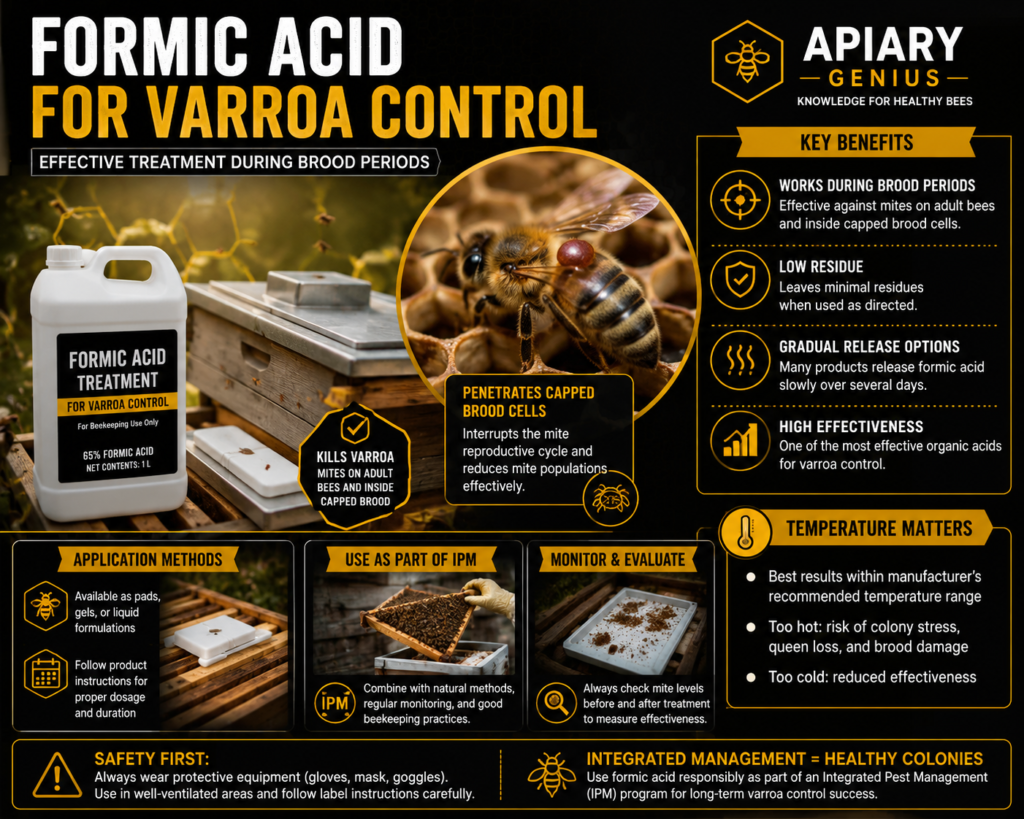
Formic acid is one of the few treatments capable of killing varroa mites both on adult bees and inside capped brood cells. This unique ability makes it highly effective during periods when brood is present, helping reduce mite populations that other treatments may not reach.
One of the main advantages of formic acid is that it penetrates capped brood cells, interrupting the mite reproductive cycle while leaving minimal residues when used correctly. Many commercial products are designed to release formic acid gradually, providing effective control over several days.
Temperature plays a critical role in treatment success. Formic acid performs best within the manufacturer’s recommended temperature range. Applying it during excessively hot weather may stress the colony, increase queen loss, or reduce brood survival, while very low temperatures can decrease its effectiveness.
As with any varroa treatment, beekeepers should monitor mite levels before and after application. Formic acid should be used as part of an Integrated Pest Management (IPM) program rather than as a standalone solution. Combining it with natural management practices and regular monitoring provides healthier colonies and reduces the risk of treatment resistance.
Amitraz
Amitraz is one of the most widely used synthetic treatments for controlling varroa mites in honey bee colonies. It is commonly available in slow-release strips that remain inside the hive for several weeks, allowing the active ingredient to control mites that come into contact with adult bees. When used according to the manufacturer’s instructions, amitraz can provide highly effective mite control.
Unlike oxalic acid, amitraz does not penetrate capped brood cells. Instead, it relies on repeated contact with adult bees as new mites emerge from brood. For this reason, treatment duration is important to ensure mites leaving brood cells are exposed before they reproduce again.
To reduce the risk of resistance, amitraz should never be overused or applied continuously season after season. Beekeepers are encouraged to rotate treatment methods and combine chemical treatments with regular mite monitoring and integrated pest management (IPM) practices.
Always remove treatment strips at the recommended time and avoid using amitraz during honey production periods unless the product label specifically allows it. Responsible use helps maintain treatment effectiveness while protecting colony health and honey quality.
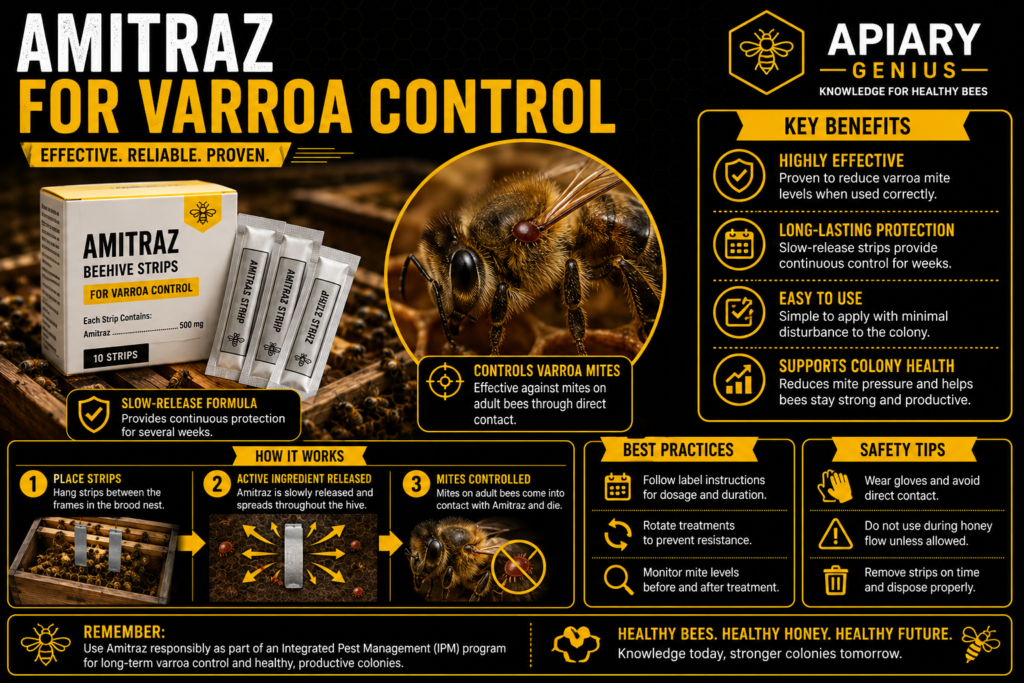
Although amitraz is highly effective, rotating treatments is essential to reduce the risk of resistance.
Thymol
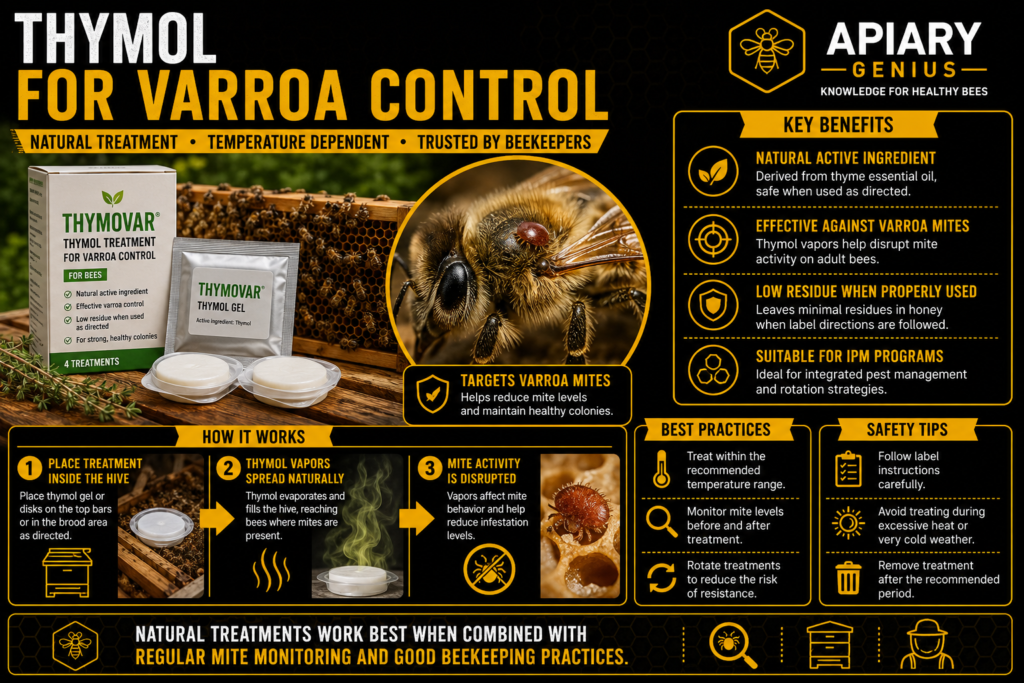
Thymol is a naturally derived compound extracted from thyme essential oil and is one of the most widely used organic treatments for varroa mites. It works by releasing vapors inside the hive that disrupt mite activity while remaining relatively safe for honey bees when applied according to label instructions.
The effectiveness of thymol depends heavily on temperature. Most thymol-based treatments perform best within a moderate temperature range, as cool weather reduces vapor release while excessive heat may increase stress on the colony. Always follow the manufacturer’s recommendations regarding seasonal timing and environmental conditions.
Because thymol relies on evaporation, hive ventilation and colony strength can also influence treatment success. Beekeepers should avoid disturbing the colony during treatment and ensure adequate airflow while preventing excessive heat buildup inside the hive.
Although thymol is considered a natural treatment, it should still be used responsibly as part of an Integrated Pest Management (IPM) strategy. Regular mite monitoring, treatment rotation, and proper hive management help maintain long-term effectiveness while reducing the risk of resistance.
Integrated Pest Management (IPM)
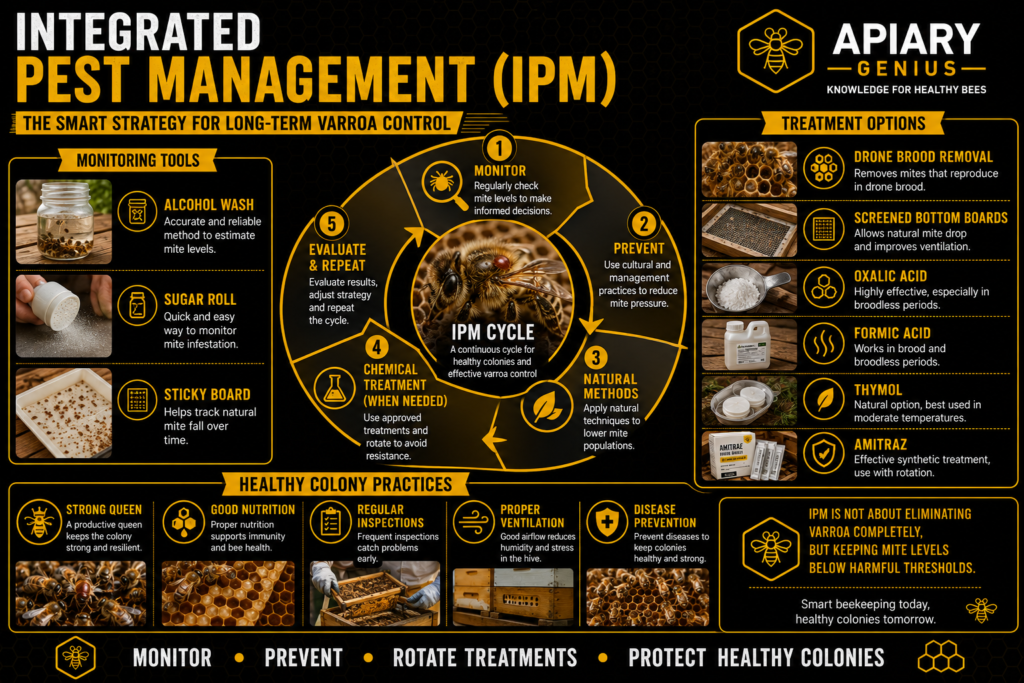
Learning how to control varroa mites requires a long-term strategy rather than relying on a single treatment. Integrated Pest Management (IPM) combines regular monitoring, cultural practices, biological methods, and carefully selected chemical treatments when necessary.
Successful beekeepers begin by monitoring mite populations throughout the season using reliable testing methods such as alcohol washes or sugar rolls. Treatment decisions should always be based on actual mite levels rather than fixed calendar dates.
Natural techniques—including drone brood removal, screened bottom boards, brood breaks, and essential oils—can significantly reduce mite pressure. When infestations exceed economic thresholds, approved treatments such as oxalic acid, formic acid, amitraz, or thymol may be introduced as part of a rotation strategy to reduce the risk of resistance.
Good colony management is equally important. Strong queens, proper nutrition, disease prevention, adequate hive ventilation, and routine inspections help colonies withstand parasite pressure and recover more quickly after treatment.
By combining monitoring, prevention, and responsible treatment rotation, Integrated Pest Management provides the most sustainable approach to keeping varroa mites under control while maintaining productive and healthy honey bee colonies.
For the latest recommendations, consult the USDA Honey Bee Health resources.
Common Mistakes to Avoid
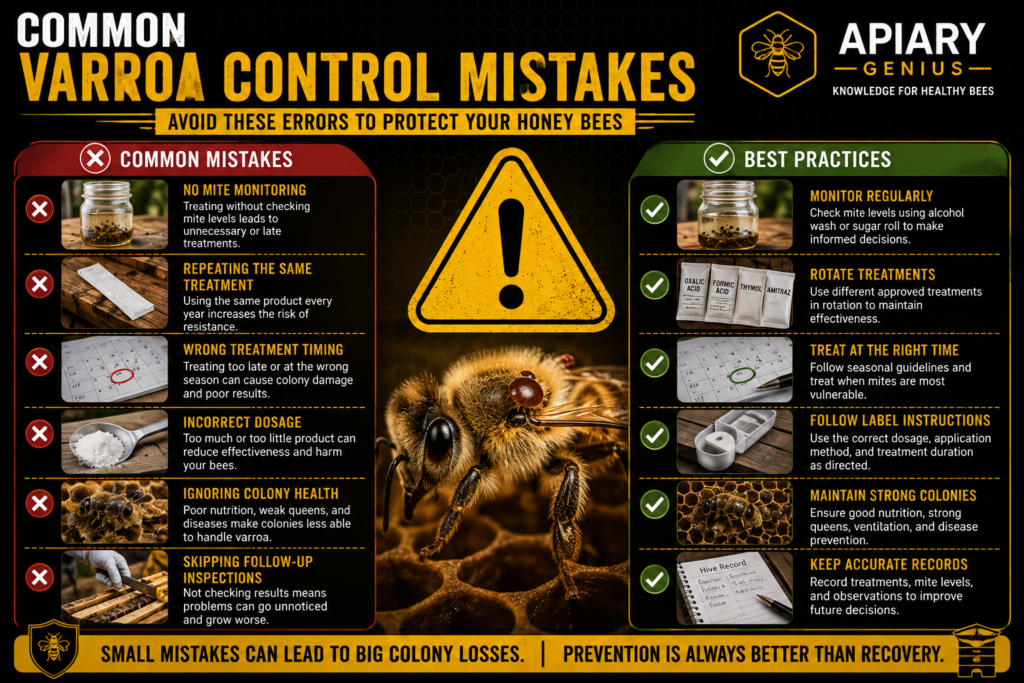
Even experienced beekeepers can make mistakes that reduce the effectiveness of varroa control. Avoiding these common errors helps protect honey bee colonies and improves long-term treatment success.
One of the most frequent mistakes is treating without first monitoring mite levels. Applying treatments on a fixed schedule instead of using actual infestation data can waste time, increase costs, and contribute to treatment resistance.
Another common error is relying on a single treatment year after year. Rotating approved treatment methods and combining them with natural management practices helps maintain effectiveness while reducing the risk of resistant mite populations.
Timing also plays a critical role. Delaying treatment until mite populations become extremely high may cause irreversible damage to the colony, while treating at the wrong season or temperature can reduce treatment performance.
Some beekeepers overlook colony health. Poor nutrition, weak queens, inadequate ventilation, and neglected disease management place additional stress on bees and make colonies less able to tolerate varroa infestations.
Finally, always read and follow product instructions carefully. Incorrect dosages, improper application methods, or removing treatments too early can reduce effectiveness and may harm the colony.
Avoiding these common mistakes, together with regular monitoring and Integrated Pest Management (IPM), gives honey bee colonies the best chance to remain healthy and productive throughout the season.
How to Prevent Future Infestations
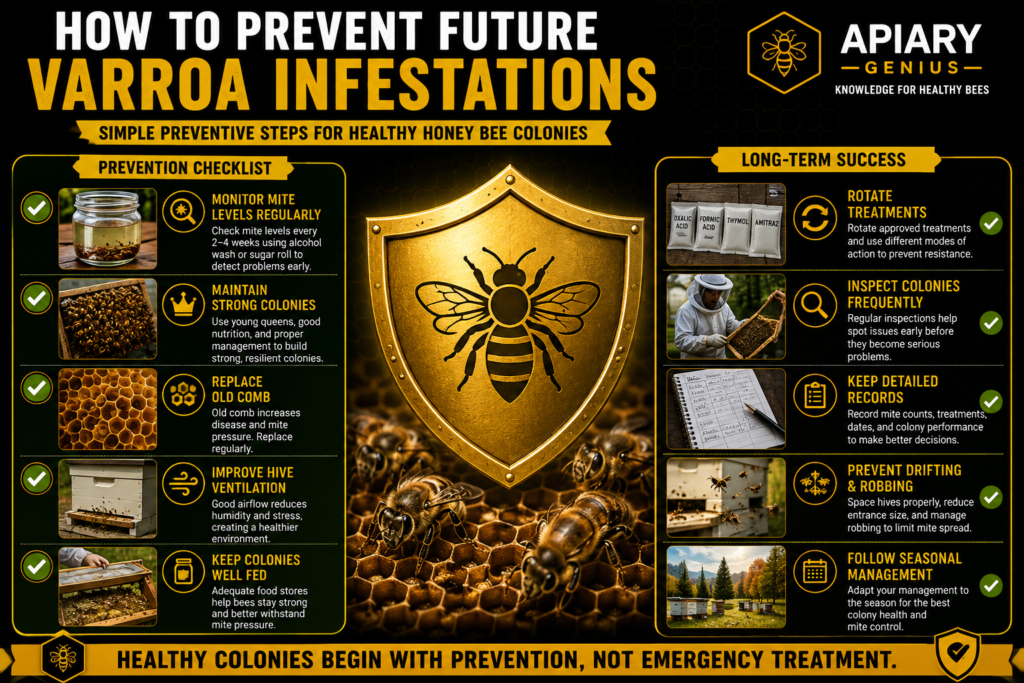
Preventing future varroa infestations is far easier and less expensive than controlling a severe outbreak. Successful beekeepers focus on prevention throughout the year rather than waiting until mite populations become dangerously high.
Regular mite monitoring is the foundation of prevention. Checking colonies every few weeks during the active season allows beekeepers to detect increasing mite levels early and respond before significant damage occurs. Decisions should always be based on monitoring results rather than guesswork.
Maintaining strong and healthy colonies also improves natural resistance. Young productive queens, balanced nutrition, good hive ventilation, and adequate food reserves help honey bees better tolerate parasite pressure and recover more quickly after treatments.
Good apiary hygiene plays an important role as well. Replacing old comb, cleaning equipment, reducing drifting between colonies, and avoiding the transfer of infested frames all help limit the spread of varroa mites.
Treatment rotation is another key preventive strategy. Repeated use of the same product can encourage resistance, while alternating approved treatments and combining them with natural management techniques improves long-term effectiveness.
Finally, keep detailed records of mite counts, treatments, weather conditions, and colony performance. Accurate records make it easier to identify seasonal trends and choose the most effective management strategy for future seasons.
By combining prevention, monitoring, and responsible management, beekeepers can greatly reduce the likelihood of serious varroa infestations while maintaining strong and productive honey bee colonies.
Frequently Asked Questions (FAQ)
What is the most effective treatment for varroa mites?
There is no single treatment that works best in every situation. The most effective approach depends on the season, brood levels, temperature, and local regulations. Integrated Pest Management (IPM), which combines monitoring, natural methods, and approved treatments when necessary, provides the most reliable long-term results.
Can honey bees survive a varroa infestation without treatment?
In most cases, unmanaged varroa populations continue to grow and eventually weaken or destroy the colony. While some bee populations show natural resistance, regular monitoring and responsible management are usually necessary to maintain healthy colonies.
How often should I check for varroa mites?
During the active beekeeping season, colonies should be monitored every 3–4 weeks or whenever conditions suggest increasing mite pressure. Regular testing allows early intervention before infestations become severe.
Are natural methods enough to control varroa mites?
Natural methods can significantly reduce mite populations, especially when infestations are low or moderate. However, severe infestations often require approved treatments as part of an Integrated Pest Management strategy.
Can varroa mites become resistant to treatments?
Yes. Repeated use of the same chemical treatment can lead to resistance over time. Rotating approved treatments and combining them with natural management practices helps maintain long-term effectiveness.
What is the best way to prevent future infestations?
Regular mite monitoring, maintaining strong colonies, practicing good apiary hygiene, rotating treatments, and keeping accurate records are the most effective ways to prevent serious varroa infestations.
These practical tips show how to control varroa mites safely while protecting colony health and improving long-term beekeeping success.
Conclusion
Varroa mites remain one of the greatest threats to honey bee colonies worldwide, but they can be successfully managed with the right knowledge and a consistent long-term strategy. Regular monitoring, early detection, natural management practices, and responsible use of approved treatments all play essential roles in keeping mite populations under control.
No single method provides a permanent solution. Instead, the most successful beekeepers combine prevention, monitoring, Integrated Pest Management (IPM), and treatment rotation to protect colony health while reducing the risk of resistance.
By following the strategies outlined in this guide, you can minimize varroa infestations, strengthen your colonies, improve honey production, and support healthier bees throughout every beekeeping season.
Healthy colonies don’t happen by chance—they are built through careful observation, informed decisions, and consistent management.
If you’re just getting started, read our guide on Essential Beekeeping Tools for Beginners to build a strong foundation before managing varroa mites.

Want to become a better beekeeper? Explore more expert guides on Apiary Genius and keep learning how to build stronger, healthier honey bee colonies.