
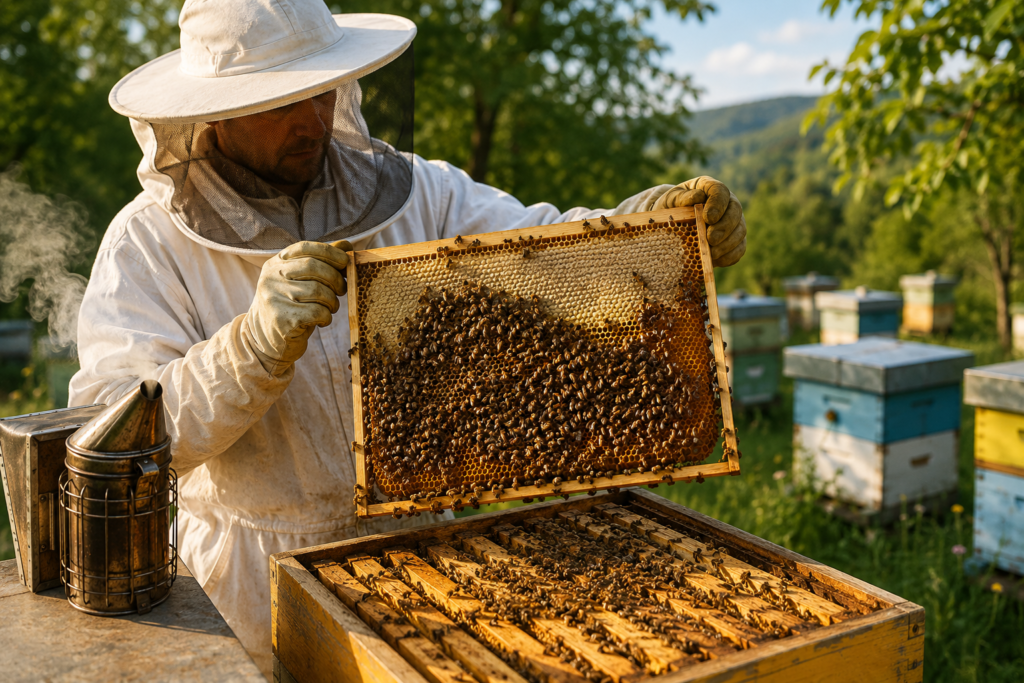
How to harvest honey properly is one of the most important skills every beginner beekeeper should learn. Harvesting honey is also one of the most rewarding moments in a beekeeper’s year. But knowing when and how to harvest properly is essential, both for the quality of your honey and for the wellbeing of your bees. This guide walks you through everything you need to know, from timing to equipment to the extraction process itself.
Table of Contents
When Is Honey Ready to Harvest?
The single biggest mistake new beekeepers make is harvesting too early. Honey that isn’t fully “cured” contains too much moisture and will ferment in storage, ruining the batch.
The most reliable way to check readiness is the capped frame test. Bees cap honeycomb cells with a thin layer of wax once the moisture content drops to around 17-18%, which is the safe threshold for long-term storage. Look for frames where at least 80% of the cells are capped white or light tan. If a frame is only partially capped, leave it in the hive for another few weeks.
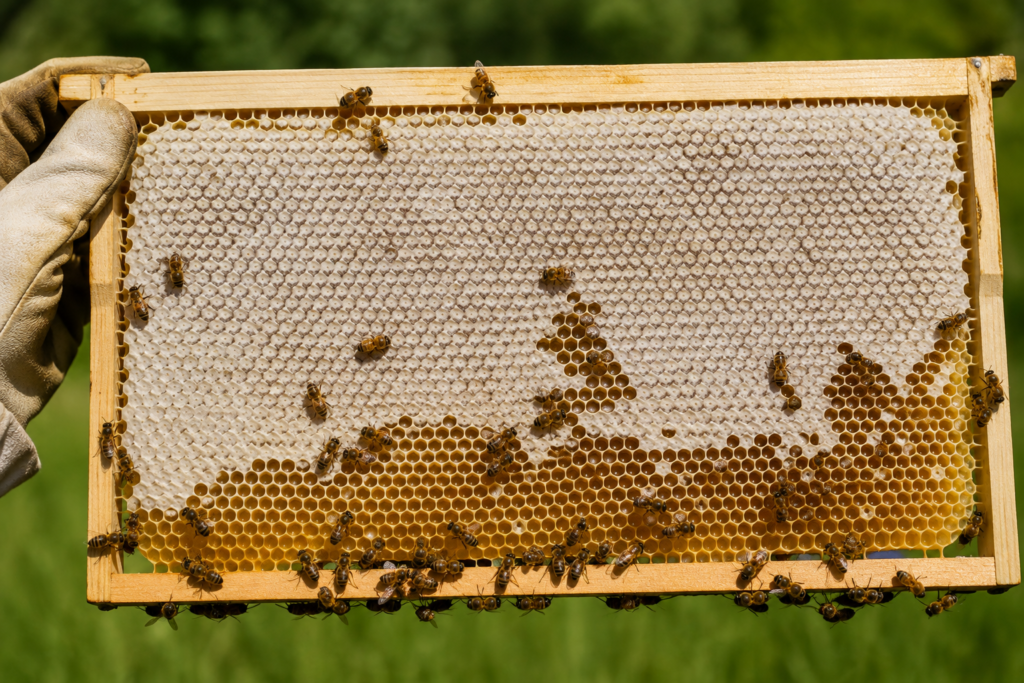
You can also do a simple shake test: hold the frame horizontally over the hive and give it a gentle shake. If liquid honey drips out, the moisture content is too high and the frame isn’t ready.
Timing also depends on your region and nectar flow. In most temperate climates, the main harvest happens in mid-to-late summer, after the primary nectar flow has ended, giving bees enough time to cap their stores. Always leave enough honey behind for the colony to survive winter — as a general rule, a strong colony needs 40-60 lbs (18-27 kg) of honey stores to overwinter safely.
Equipment You’ll Need
Having the right equipment makes it much easier to learn how to harvest honey safely and efficiently.
For additional guidance on beekeeping equipment and honey production, see the resources provided by Penn State Extension.
Before you start, gather the right tools so the process goes smoothly and doesn’t stress the colony longer than necessary:
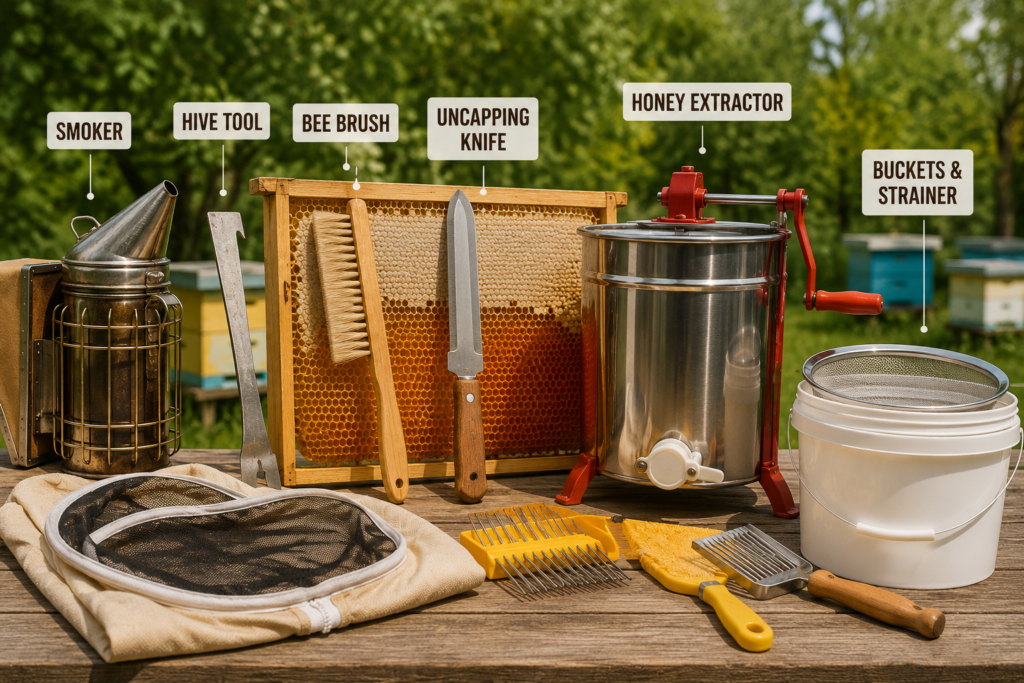
- Bee suit, gloves, and smoker — for safe frame removal
- Hive tool — to loosen frames and break propolis seals
- Bee brush or fume board — to gently clear bees off frames without crushing them
- Uncapping knife or uncapping fork — to remove the wax cappings before extraction
- Honey extractor (manual or electric) — spins frames to pull honey out using centrifugal force
- Double sieve or strainer — to filter out wax bits and debris
- Food-grade buckets or jars — for storage and bottling
If you’re only managing one or two hives, a manual crank extractor is usually enough and far more affordable than an electric model.
Step-by-Step Harvesting Process
Learning how to harvest honey correctly starts with following a careful step-by-step process.
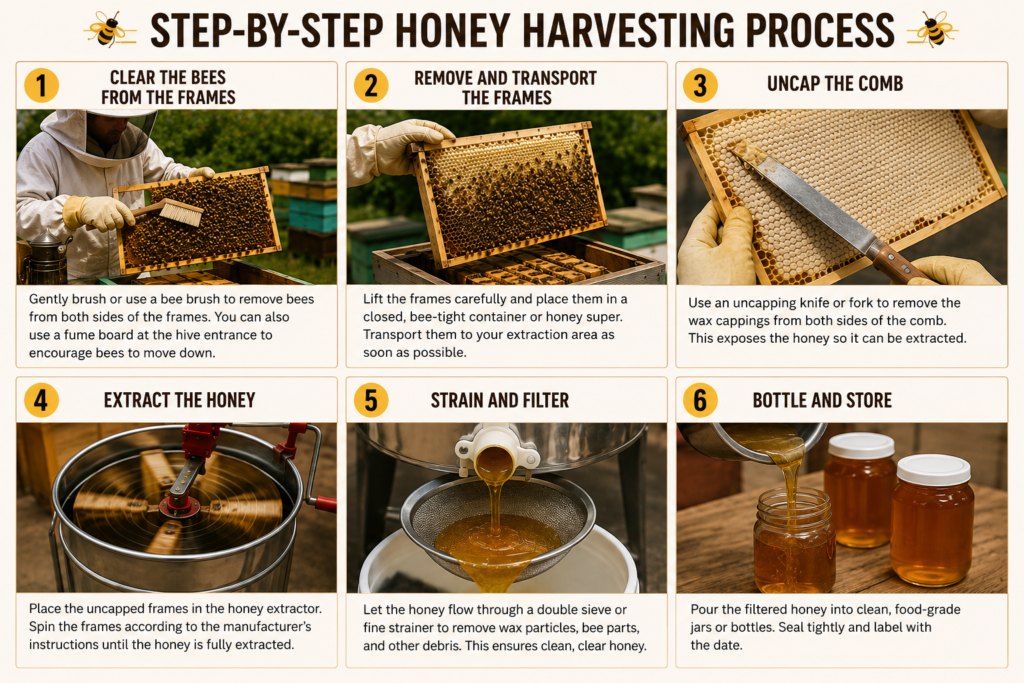
Clear the Bees from the Frames
Use a bee brush to gently sweep bees off each frame, or place a fume board (a board treated with a bee-repellent scent) above the hive to drive bees downward before you remove the honey super.
Remove and Transport the Frames
Once the frames are mostly clear of bees, move them into a covered container to prevent robbing bees from other colonies from finding the exposed honey.
Uncap the Comb
Using an uncapping knife or fork, slice off the thin wax layer covering each cell. Work over a container to catch the wax cappings — they can be saved and rendered into beeswax later.
Extract the Honey
Load the uncapped frames into your extractor and spin. Centrifugal force pulls the honey out of the cells and onto the extractor walls, where it drains to the bottom.
Strain and Filter
Pour the raw honey through a double sieve to remove wax fragments, bee parts, and other debris while preserving the natural pollen and enzymes.
Bottle and Store
Let the honey settle for 24-48 hours so any remaining air bubbles rise to the top, then bottle it in clean, food-grade jars. Store in a cool, dark place — properly cured honey can last for years without spoiling.
How Much Honey Can You Harvest From One Hive?
One of the most common questions beginners ask is how much honey they can harvest from a single hive. The answer depends on several factors, including colony strength, local nectar flow, weather conditions, forage availability, and overall hive management.
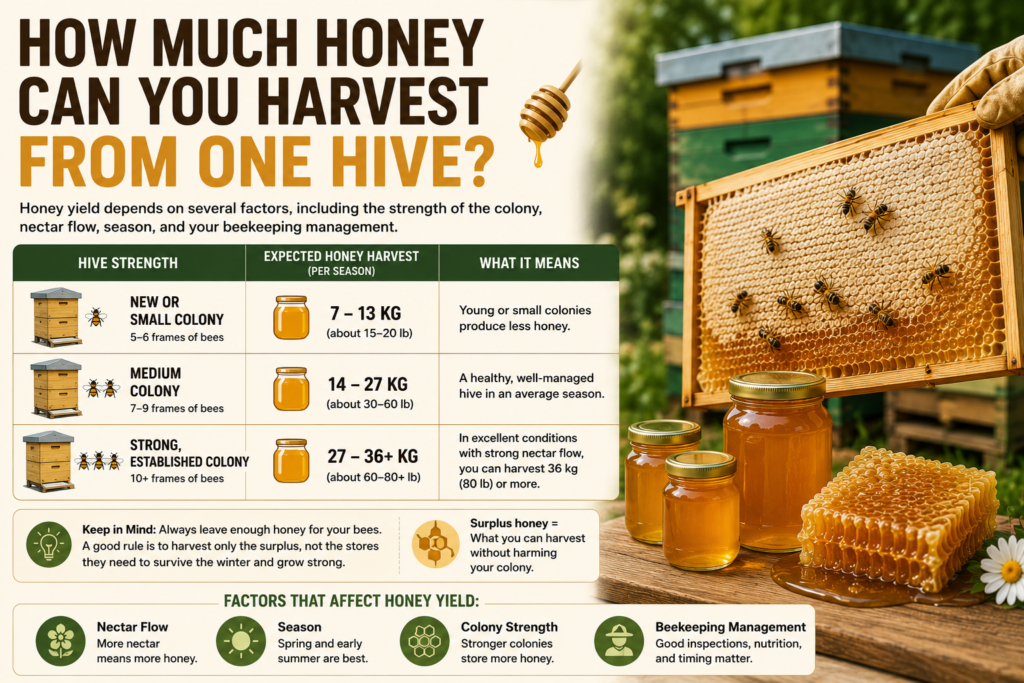
A healthy, well-established colony can produce 30 to 60 pounds (14–27 kg) of surplus honey in an average season. Under exceptional conditions with abundant nectar sources, experienced beekeepers may harvest 80 pounds (36 kg) or more from one hive. However, new colonies often produce much less because they must first build comb and strengthen the population.
When deciding how to harvest honey, never aim to collect every frame filled with honey. Bees need enough stored honey to survive periods of poor forage and winter. As a general guideline, leave 40–60 pounds (18–27 kg) of honey for overwintering in colder climates, or follow your local beekeeping recommendations.
Remember that the goal is not to maximize the honey harvest every season but to maintain a healthy, productive colony that will continue producing honey for years to come.
Should You Harvest Honey in the First Year?
Many beginner beekeepers wonder whether they should harvest honey during the first year. In most cases, the answer is it depends on the colony’s development.
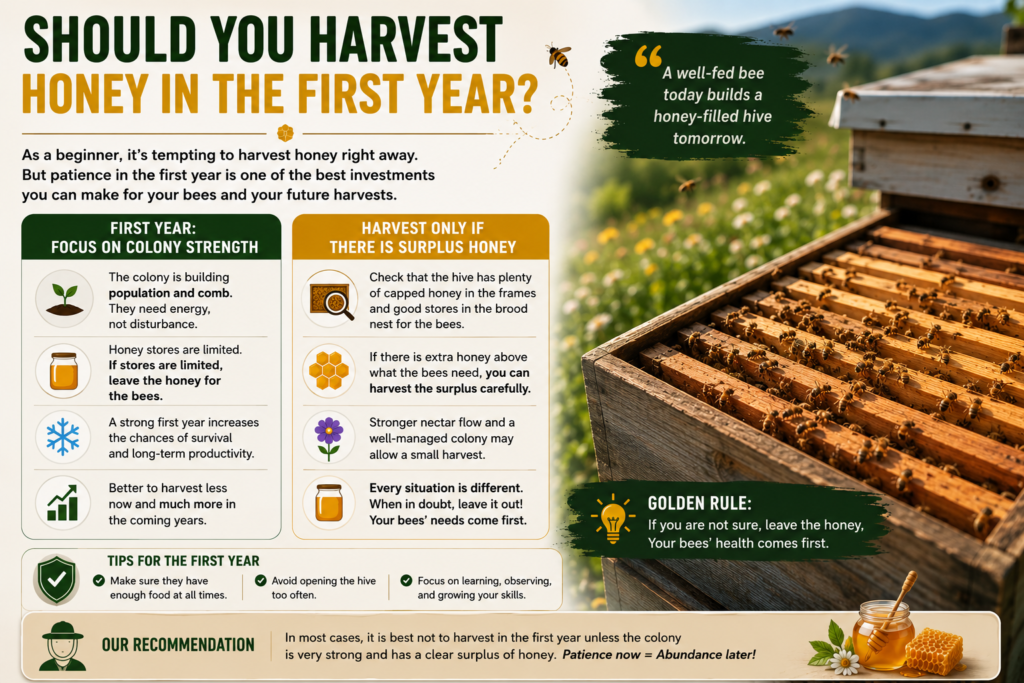
A newly installed colony spends much of its first season building comb, raising brood, and storing food reserves. Because of this, many first-year hives produce little or no surplus honey, especially if they were established late in the season or experienced poor nectar flow.
If your bees have filled and capped enough frames while still keeping sufficient honey for their own needs, you may be able to harvest a small surplus. However, if honey stores are limited, it is usually better to leave the honey for the colony rather than risk weakening it before winter.
When learning how to harvest honey, remember that the health of your bees should always come before maximizing your harvest. A strong colony entering the next season will often reward you with a much larger honey crop in the future.
If you’re still building your first colony, our How to Start Beekeeping guide covers the essential steps for establishing a healthy hive before your first honey harvest.
How to Store Honey Without Crystallization
After you harvest honey, proper storage is essential for preserving its flavor, aroma, and natural quality. Although crystallization is a completely natural process and does not mean the honey has spoiled, many people prefer to keep their honey smooth and liquid for as long as possible.
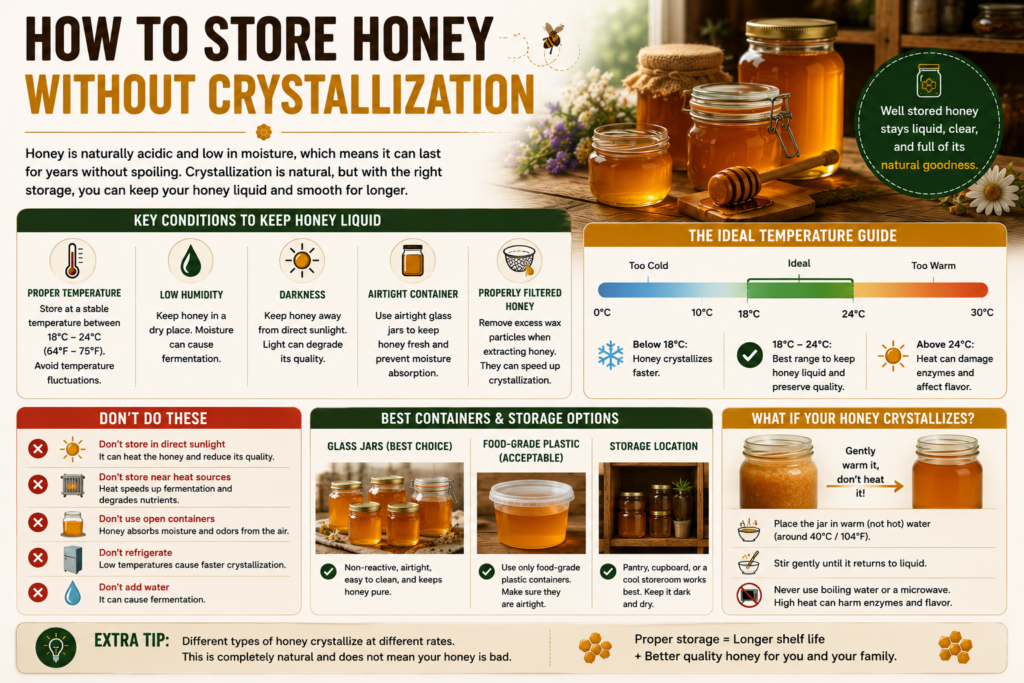
The best way to store honey is in a clean, airtight, food-grade glass jar. Keep it in a cool, dry place away from direct sunlight and excessive humidity. The ideal storage temperature is between 64°F and 75°F (18°C to 24°C). Avoid refrigerating honey, as cold temperatures speed up the crystallization process.
If your honey does crystallize, simply place the jar in warm water (below 104°F / 40°C) and stir gently until the crystals dissolve. Avoid overheating honey or using a microwave, as high temperatures can reduce its natural enzymes, aroma, and beneficial compounds.
Learning how to harvest honey also means knowing how to store it correctly. Proper storage helps maintain the honey’s natural quality and ensures you enjoy the best flavor long after harvest season.
Common Mistakes to Avoid
When learning how to harvest honey, avoiding a few common mistakes can protect both your bees and the quality of your honey.
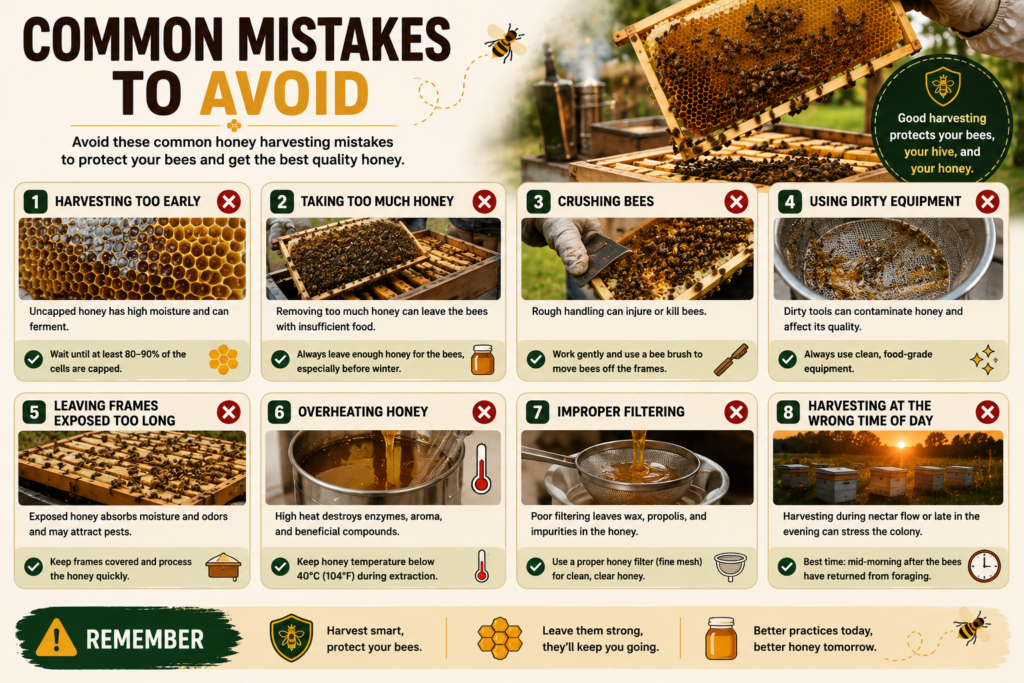
- Harvesting uncapped honey — leads to fermentation and spoilage
- Taking too much — always leave adequate winter stores for the colony
- Working during a strong nectar flow — bees are more defensive and harder to clear from frames
- Skipping the strain step — unfiltered honey can crystallize unevenly and contain debris
- Harvesting in cold or rainy weather — bees are more aggressive and honey is harder to extract
With good timing and careful handling, learning how to harvest honey becomes much easier without putting unnecessary stress on the colony.
Frequently Asked Questions
How do I know when honey is ready to harvest?
Honey is ready when at least 80% of the honeycomb cells are capped with wax. You can also perform a gentle shake test—if honey drips from the frame, it still contains too much moisture and should remain in the hive longer.
Can you harvest honey without a honey extractor?
Yes. If you only keep one or two hives, you can use the crush-and-strain method instead of an extractor. While this method destroys the comb, it is inexpensive and works well for small-scale beekeeping.
What is the best time of year to harvest honey?
In most regions, the best time to harvest honey is during mid-to-late summer, after the main nectar flow has ended and most honey frames are fully capped.
How often can you harvest honey from a hive?
Most beekeepers harvest honey once or twice a year, depending on the local climate, nectar flow, and the strength of the colony.
Does harvesting honey hurt the bees?
When done correctly, harvesting honey does not harm the bees. Use gentle handling techniques, avoid crushing bees, and always leave enough honey for the colony’s own needs.
Final Thoughts
Once you understand how to harvest honey safely, the process becomes easier and more rewarding with each season.
Honey harvesting is where all your season’s beekeeping work pays off, but it rewards patience and attention to detail far more than speed. Wait for properly capped frames, use gentle techniques to protect your bees, and always prioritize the colony’s winter survival over maximizing your yield. Done right, harvest day becomes one of the most satisfying parts of the beekeeping calendar.